Longevity
Vascular Health Biohacking: Preserving the Endothelial Glycocalyx for Longevity
By Samir Levin · September 4, 2026 · 17 min read
Disclaimer
This article is for informational and educational purposes only. It does not constitute medical advice, diagnosis, or treatment. Always consult a qualified healthcare provider before starting any new supplement, peptide, or protocol. Keys to Health and Samir Levin are not responsible for any actions taken based on this content.
Your standard lipid panel is a clinical distraction that masks the slow erosion of your endothelial glycocalyx. Most doctors ignore the microscopic, non-stick coating of your blood vessels until it's already gone and plaque has begun to crystallize. You're right to feel frustrated by "normal" LDL results when you know your biological age tells a different story. We've spent 25 years moving past surface-level metrics to focus on the cellular architecture of blood flow.
This guide introduces the next frontier of vascular health biohacking, moving beyond basic diet advice into aggressive regenerative protocols. I'll provide the clinical frameworks you need to repair the endothelial lining and optimize nitric oxide production at the source. You'll learn how to interpret advanced markers like ApoB and Lp(a) while using AI-driven tools to quantify your risk with surgical precision.
We'll break down the specific mechanisms of bioregulatory peptides and the latest diagnostic technology like the GlycoCheck 5.2 system. This isn't about maintenance; it's about a total vascular overhaul. By the end, you'll have a data-driven blueprint to preserve your arteries for the long haul.
Key Takeaways
- Identify the endothelial glycocalyx as the primary clinical target for preventing arterial aging and maintaining systemic nitric oxide bioavailability.
- Shift diagnostic focus from standard lipid panels to precision biomarkers like ApoB and Lp(a) using the HRT Bloodwork Analyzer for a true assessment of cardiovascular risk.
- Master the mechanism of action for regenerative peptides BPC-157 and TB-500 to drive VEGF-mediated angiogenesis and endothelial repair.
- Implement a 12-week vascular health biohacking framework to mitigate the immediate damage caused by hyperinsulinemia and glucose-induced glycocalyx shedding.
- Utilize advanced diagnostic tools like GlycoCheck 5.2 to quantify your MicroVascular Health Score and track the efficacy of your vascular optimization protocol.
Table of Contents
The Endothelial Glycocalyx: The Primary Biohacking Target
The vascular system is often reduced to a series of pipes, but the true intelligence of the system lies in the Endothelial Glycocalyx. This microscopic, gel-like layer lines the interior of every blood vessel, acting as a sophisticated non-stick coating that prevents platelets and white blood cells from adhering to the vessel wall. In the context of vascular health biohacking, we view this structure as the primary defense against the cascade of events that lead to atherosclerosis.
Beyond its role as a physical barrier, the glycocalyx functions as a sensory organ. It facilitates mechanotransduction, a process where the shear stress of blood flow is converted into biochemical signals. This triggers the endothelium to produce Nitric Oxide (NO), which regulates vasodilation and maintains arterial flexibility. Without a robust glycocalyx, your vessels lose their ability to respond to pressure changes, leading to systemic stiffness and reduced oxygen delivery.
Mechanisms of Vascular Shielding
A resilient glycocalyx regulates leukocyte adhesion by masking adhesion molecules like ICAM-1 and VCAM-1. This prevents the inflammatory "stickiness" that precedes plaque formation. It also serves as a reservoir for superoxide dismutase (SOD), an enzyme that neutralizes reactive oxygen species before they can damage the underlying endothelial cells. Maintaining this shield is central to our Cardiovascular Protocol, as it directly correlates with lower biological age and enhanced systemic resilience.
The Consequences of Glycocalyx Shedding
Chronic inflammation, oxidative stress, and hyperglycemia act as "shredders" that degrade this protective layer. Within minutes of a glucose spike, the glycocalyx begins to thin, releasing fragments like syndecan-1 into the bloodstream. Elevated syndecan-1 levels are a clinical smoking gun for endothelial dysfunction and reduced blood flow efficiency. When this layer is compromised, lipoproteins can more easily penetrate the vessel wall, initiating the buildup of plaque.
Standard medicine ignores these early markers, waiting instead for late-stage arterial blockages. Optimization requires a different approach. We use tools like the HRT Bloodwork Analyzer to identify the metabolic signatures of shedding before they manifest as structural disease. Optimized vascular health isn't the absence of a heart attack; it's the preservation of a high-performance microvascular network that supports every organ in your body.
Diagnostic Precision: Beyond the Standard Lipid Panel
Standard lipid panels are clinical relics that offer a dangerously incomplete picture of your cardiovascular risk. They measure the mass of cholesterol within particles, which tells you the weight of the cargo but nothing about the number of "trucks" on the road. For effective vascular health biohacking, we prioritize particle count and inflammatory signaling over legacy metrics like LDL-C.
We process these advanced markers through our AI Bloodwork Analyzer to identify subtle trends that standard clinical software misses. This allows us to map the role of the endothelial glycocalyx degradation against your metabolic data. If your glycocalyx is thinning, even "normal" cholesterol levels can lead to rapid plaque accumulation.
Apolipoprotein B (ApoB) is the definitive marker for atherogenic risk. Every potentially harmful particle, from VLDL to LDL, carries exactly one ApoB molecule. A high ApoB count indicates a high density of particles capable of penetrating the vessel wall, regardless of how much cholesterol they carry. We also track Lipoprotein(a), a genetically determined particle that is highly pro-inflammatory and increases the risk of early-onset heart disease.
Predictive Vascular Biomarkers
ApoB provides a direct count of total atherogenic particles. While standard labs might consider a result under 100 mg/dL acceptable, we target much lower ranges for longevity. Fibrinogen is another critical marker; it drives blood viscosity and increases the mechanical friction against the delicate vascular lining.
- ApoB: Target < 60 mg/dL for optimal protection.
- hs-CRP: Target < 1.0 mg/L to ensure low systemic inflammation.
- Homocysteine: Target < 9.0 µmol/L to prevent direct endothelial irritation.
- Lp(a): Target < 75 nmol/L to minimize genetic thrombotic risk.
Advanced Functional Testing
Bloodwork shows the potential for damage, but functional tests measure the actual structural age of your arteries. I recommend the Carotid Intima-Media Thickness (CIMT) scan over a standard calcium score. CIMT identifies soft plaque and arterial thickening years before they calcify, allowing for proactive intervention rather than reactive management.
The EndoPAT test is another valuable tool that measures endothelial reactive hyperemia non-invasively. It provides a real-time look at how well your vessels dilate in response to metabolic stress. You can use our Protocol Builder to integrate these functional test results into a cohesive strategy. If your functional markers indicate high vascular age, you should review our comprehensive cardiovascular protocol for targeted regenerative interventions.
Peptide Stacks for Vascular Repair and Angiogenesis
Diagnostics identify the level of damage, but regenerative peptides provide the biochemical tools for active restoration. BPC-157 (Body Protection Compound) is a pentadecapeptide that upregulates the expression of Vascular Endothelial Growth Factor (VEGF). This mechanism triggers the formation of new blood vessels, a process essential for bypassing damaged microvascular networks. In animal models, BPC-157 has demonstrated a unique ability to promote the healing of the vascular endothelium by activating the FAK-paxillin signaling pathway.
We frequently stack this with TB-500, a synthetic version of the naturally occurring peptide Thymosin Beta-4. Its primary mechanism involves actin-mediated cell migration, which allows endothelial cells to move into damaged areas of the vessel wall. This synergy is a cornerstone of our Regenerative Protocol, as it pairs a growth signal with the mechanical ability to rebuild the vascular architecture. Biohacking angiogenesis for longevity requires this dual-pronged approach to maintain systemic blood flow efficiency.
Dosing and Implementation Protocols
Precision is mandatory when implementing these compounds. I recommend a subcutaneous administration protocol to maximize systemic bioavailability and target the vascular lining directly. You can use our Peptide Reconstitution Calculator to ensure accurate concentrations when mixing your research compounds. The following dosing ranges are derived from successful clinical observations in the biohacking community.
- BPC-157: 250–500 mcg per day, administered via a single subcutaneous injection.
- TB-500: 2–5 mg per week, often split into two separate doses to maintain stable plasma levels.
Angiogenesis and Microvascular Health
Angiogenesis isn't just for injury recovery; it's the foundation of microvascular density. Thymosin Beta-4 increases endothelial cell differentiation, ensuring that new capillaries are structurally sound and functionally responsive. This process prevents the "rarefaction" or thinning of the capillary beds that typically occurs with chronological aging. For a deeper analysis of these mechanisms, consult the Compound Encyclopedia, which details over 112 research compounds used in vascular health biohacking and systemic optimization.
Metabolic Biohacking: Protecting the Pipes
Metabolic dysfunction is the fastest way to compromise your vascular architecture. Hyperinsulinemia acts as a chemical corrosive, triggering the immediate shedding of the endothelial glycocalyx within 30 minutes of a significant glucose spike. This degradation isn't just a temporary setback; it creates a window of vulnerability where inflammatory cytokines can penetrate the vessel wall. Effective vascular health biohacking requires a ruthless approach to insulin management to keep the glycocalyx intact.
We leverage intermittent fasting to induce Autophagy, which facilitates the clearance of senescent endothelial cells and vascular debris. This process ensures that the microvascular network remains free of the protein aggregates that drive arterial stiffness. For those managing complex glycemic profiles, our Metabolic Protocol provides the advanced clinical framework for stabilizing these metabolic variables.
Nitric Oxide Optimization
Nitric oxide (NO) is the primary signaling molecule for vasodilation and vascular tone. While many use L-Arginine, it suffers from poor oral bioavailability and rapid degradation in the liver. I prioritize L-Citrulline because it bypasses first-pass metabolism, effectively raising plasma arginine levels more efficiently than arginine itself. This provides a sustained substrate for the endothelial nitric oxide synthase (eNOS) enzyme to produce NO.
The nitrate-nitrite-NO pathway serves as a critical secondary system. By consuming concentrated dietary nitrates, you can maintain NO production even in acidic or hypoxic environments where the standard oxygen-dependent pathway fails. I recommend the following daily support protocol:
- L-Citrulline Malate: 6–8g daily, split into two doses.
- Dietary Nitrates: 400–600mg from arugula or concentrated beet extract.
- Glutathione: 500mg to reduce NO quenching by oxidative stress.
Glycemic Variability and Vascular Stress
Relying on HbA1c is a dangerous diagnostic mistake. It provides a 90-day average that masks the volatile post-prandial spikes that do the actual damage to your vascular lining. I recommend using a Continuous Glucose Monitor (CGM) to track real-time glycemic variability. This data allows you to identify specific glycocalyx-shredding events and adjust your nutrition or compound timing accordingly.
We use glucose disposal agents like Berberine to enhance insulin sensitivity via AMPK activation. Berberine has been shown in clinical trials to be as effective as Metformin in reducing fasting blood glucose and post-meal excursions without the same risk of B12 depletion. Maintaining a flat glucose curve is the single most important metabolic habit for preserving your "pipes."
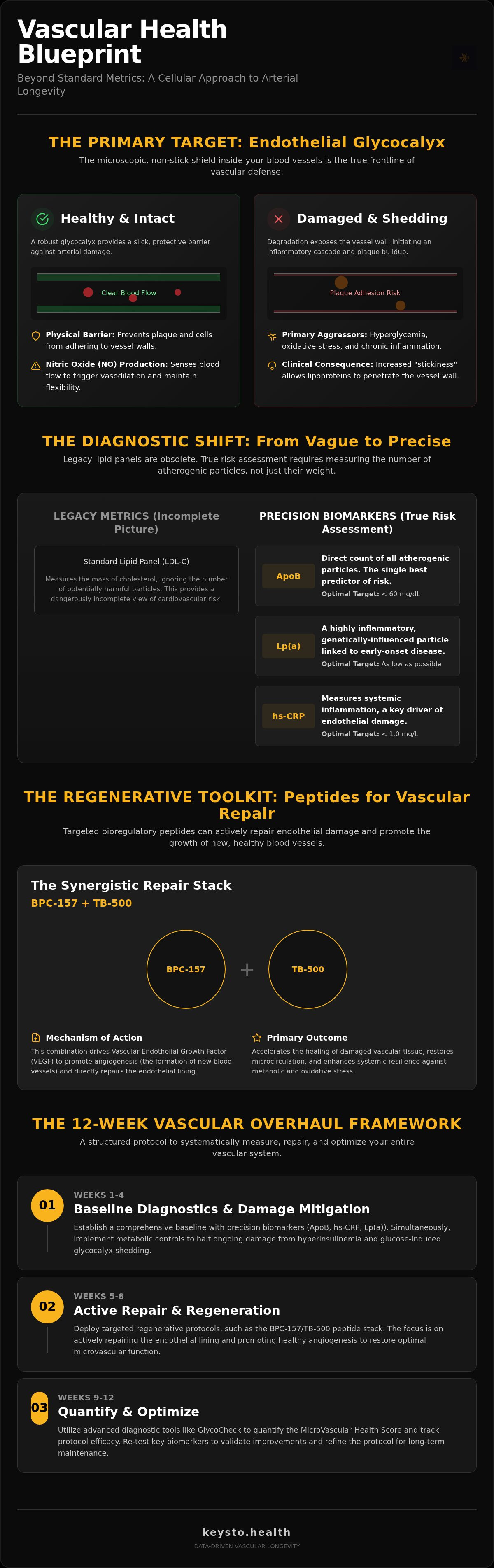
The Keys to Health Vascular Protocol: Integration
Rebuilding a damaged vascular system requires a systematic convergence of diagnostic tracking, metabolic stabilization, and peptide signaling. We've synthesized these elements into a repeatable framework that moves from defensive protection to active regeneration. Effective vascular health biohacking uses metabolic stability to stop the erosion of the glycocalyx, followed by targeted peptide therapy to rebuild the structural architecture. You can find the granular details for implementation in our Cardiovascular Protocol.
Integration means moving past isolated supplements and into a synchronized biological strategy. I've spent 25 years refining this approach to ensure that each intervention builds upon the last. We don't just "try" compounds; we deploy them based on the specific deficiencies identified in your advanced bloodwork. This methodology ensures that your biological age remains significantly lower than your chronological age.
The 12-Week Vascular Blueprint
The first four weeks of the protocol focus on baseline diagnostics and stopping the immediate shedding of the glycocalyx. We establish metabolic stability using CGM data and initiate nitric oxide substrate loading with L-Citrulline and dietary nitrates. This phase creates the stable environment necessary for the more aggressive regenerative steps that follow.
Weeks 5 through 8 transition into the regenerative phase. During this block, we introduce the BPC-157 and TB-500 stack to stimulate endothelial cell migration and drive VEGF-mediated repair. The final phase, spanning weeks 9 through 12, emphasizes systemic optimization through advanced nitrate pathways and zone 2 cardiovascular integration to harden the vascular system against future oxidative stress.
Tracking and Long-Term Maintenance
Validation is the only way to ensure your protocol is delivering measurable results. We re-test advanced biomarkers every 90 days because this timeframe allows for significant turnover in endothelial cell populations and measurable changes in arterial stiffness. You should use the AI Bloodwork Analyzer to identify if your vascular age is regressing or if you need to adjust your peptide dosing. This data-driven feedback loop prevents the "guess-and-check" method that characterizes mainstream wellness advice.
Long-term maintenance involves the strategic use of Senolytics to clear the "zombie" cells that accumulate in the vascular lining and secrete pro-inflammatory cytokines. Compounds like Quercetin and Dasatinib work by inhibiting the SCAP (Senescent Cell Anti-Apoptotic Pathways), forcing these dysfunctional cells into programmed death. This clearing of the brush is essential for maintaining the elasticity of the microvascular network over several decades. Join the Keys to Health community to stay updated on the latest research in regenerative medicine and systemic optimization.
Master Your Vascular Architecture
We've moved past the clinical distractions of standard lipid panels into a more aggressive, data-driven methodology for arterial longevity. Preserving the glycocalyx isn't a passive process; it requires the active management of metabolic variables and the strategic use of regenerative compounds. I've spent 25 years refining these protocols to ensure that biological age doesn't dictate your performance ceiling. For those who want to apply this same level of strategic precision to their professional ventures, you can discover Top7 for guidance and execution support.
Key Takeaways
- Prioritize ApoB and glycocalyx integrity over total cholesterol mass to accurately quantify your true cardiovascular risk profile.
- Deploy BPC-157 and TB-500 stacks to leverage VEGF-mediated angiogenesis for structural vessel repair and increased capillary density.
- Implement 12-week cycles of vascular health biohacking with 90-day re-testing to validate your physiological improvements through the AI Bloodwork Analyzer.
- Maintain strict glycemic stability using CGMs and glucose disposal agents like berberine to prevent the immediate chemical erosion of the vascular lining.
The blueprint for your cardiovascular future is now in your hands. I've seen these strategies transform systemic health in the most demanding high-performance environments, and they'll do the same for you. It's time to build a vascular system that supports your long-term longevity goals.
Frequently Asked Questions
What is the single most important marker for vascular health biohacking?
Apolipoprotein B (ApoB) is the most critical predictive marker for atherogenic risk. While standard LDL-C measures cholesterol mass, ApoB counts the actual number of particles capable of penetrating the endothelial wall. I target a level below 60 mg/dL for optimal protection. We use the HRT Bloodwork Analyzer to track this alongside Lipoprotein(a) to ensure a comprehensive assessment of your vascular architecture and long-term risk profile.
Can BPC-157 really repair damaged blood vessels?
BPC-157 promotes vascular repair by upregulating Vascular Endothelial Growth Factor (VEGF) and activating the FAK-paxillin signaling pathway. This mechanism facilitates the migration of endothelial cells to sites of injury and supports the formation of new capillaries. While much of the data comes from animal models, clinical observations in the biohacking community suggest significant regenerative effects on the vascular endothelium. It's a cornerstone of any aggressive vascular health biohacking strategy focused on structural restoration.
How much L-Citrulline should I take for optimal nitric oxide production?
For sustained nitric oxide elevation, I recommend a daily dosage of 6 to 8 grams of L-Citrulline Malate. Unlike L-Arginine, Citrulline bypasses first-pass metabolism in the liver, leading to higher systemic arginine levels and superior eNOS substrate availability. Split this into two doses of 3 to 4 grams to maintain stable plasma concentrations. This protocol ensures your vessels retain the ability to dilate efficiently in response to metabolic and physical stress.
Does high cholesterol always mean I have poor vascular health?
High total cholesterol is a poor proxy for actual vascular risk because it fails to account for particle count and glycocalyx integrity. You can have elevated LDL-C but a low ApoB count and a robust endothelial lining, which results in minimal plaque accumulation. Conversely, "normal" cholesterol levels can hide significant damage if your glycocalyx is thinning. We prioritize particle density and inflammatory markers over legacy lipid mass metrics to determine true health status.
How does saunas and heat stress affect vascular longevity?
Heat stress from regular sauna use triggers the release of heat shock proteins and upregulates endothelial nitric oxide synthase (eNOS). This process improves flow-mediated dilation and reduces arterial stiffness by enhancing the flexibility of the vascular wall. Clinical studies show that frequent sauna use (4 to 7 times per week) correlates with a significant reduction in cardiovascular mortality. It's a powerful tool for maintaining the "non-stick" properties of the endothelial glycocalyx.
Is there a difference between human and animal vascular protocols?
Human and animal protocols differ significantly in dosing ranges and metabolic clearance rates. While the core biological mechanisms like VEGF upregulation are similar, horses, dogs, and cats require specific scaling based on their unique physiology. Keys to Health provides dedicated animal longevity and recovery protocols that adapt these advanced biohacking tools for veterinary use. You should never apply human peptide dosages directly to animals without consulting our species-specific research guides.
Can I biohack my vascular health if I already have high blood pressure?
Biohacking is highly effective for managing hypertension by targeting the underlying causes of endothelial dysfunction. Focusing on nitric oxide precursors and glycocalyx repair can restore arterial compliance and reduce systemic peripheral resistance. You should prioritize stabilizing your glucose levels to prevent hyperinsulinemia-induced vessel damage while using BPC-157 to support endothelial resilience. This approach moves beyond symptom management into the actual restoration of high-performance vascular function.
What are the best peptides to stack for cardiovascular recovery?
The gold standard for cardiovascular recovery is the synergistic stack of BPC-157 and TB-500. BPC-157 provides the growth signal for new vessel formation, while TB-500 facilitates the actin-mediated cell migration required to rebuild the vascular wall. We recommend 250 to 500 mcg of BPC-157 daily and 2 to 5 mg of TB-500 per week. Refer to our Peptide Reconstitution Calculator for precise mixing instructions and the Compound Encyclopedia for deep dives into these research compounds.

Article by
Samir Levin
Samir Levin is a biohacker and longevity researcher with 25 years of personal experimentation across peptides, hormonal optimization, and regenerative medicine. He is the founder of Keys to Health — a platform combining a 112-compound research encyclopedia, AI-powered bloodwork analyzer, peptide protocol builder, and evidence-based PDF protocols used by thousands of biohackers worldwide.
Samir's work is grounded in first-person experimentation, not theory. He personally reversed 10+ years of AAS-induced gynecomastia without surgery using an enzymatic stack he developed and documented. His protocols are built from clinical literature, N=1 data, and feedback from the Keys to Health community.
He covers peptides, TRT/HRT, GLP-1 agents, senolytics, longevity stacks, cognitive enhancement, and animal longevity protocols for dogs, cats, and horses.
biohackinglongevityvascular healthendothelial glycocalyxpeptidesBPC-157ApoBnitric oxide