Longevity
Vascular Aging Prevention: The Clinical Checklist for Endothelial Optimization
By Samir Levin · September 5, 2026 · 16 min read
Disclaimer
This article is for informational and educational purposes only. It does not constitute medical advice, diagnosis, or treatment. Always consult a qualified healthcare provider before starting any new supplement, peptide, or protocol. Keys to Health and Samir Levin are not responsible for any actions taken based on this content.
Your "normal" blood panel often hides the ongoing structural decay of your arteries. Standard lipid markers completely ignore the microscopic degradation of the endothelial glycocalyx, the protective gel-like barrier that prevents plaque from embedding in your vessel walls. I've spent 25 years watching high-performers optimize their basic metrics while ignoring the silent, structural stiffening of their vasculature. You're right to suspect that standard primary care isn't aggressive enough for true vascular aging prevention.
I've built this protocol to bridge the gap between reactive medicine and elite longevity science. We use a data-driven approach to reverse arterial stiffness and restore endothelial function through advanced diagnostics and regenerative compounds. This isn't about "heart health" in a general sense; it's about the precision architecture of your circulatory system.
This guide breaks down the 2026 ACC/AHA dyslipidemia targets and the critical role of Lipoprotein(a) testing for the 20% of adults with inherited risk. You'll find a clinical checklist of regenerative peptides, including specific dosing for BPC-157 and TB-500, to reduce your biological vascular age and optimize performance.
Key Takeaways
- Identify the endothelial glycocalyx as the critical biological barrier where vascular decay begins. Protecting this gel-like layer is the first step in halting arterial stiffness.
- Replace outdated lipid panels with precision diagnostics like ApoB and Lp(a) to accurately assess your cardiovascular risk profile. Use the HRT Bloodwork Analyzer to establish your clinical baseline.
- Adopt a data-driven protocol for vascular aging prevention that prioritizes blood pressure management below 120/80 and the elimination of glycemic spikes.
- Deploy regenerative peptide stacks such as BPC-157 and TB-500 to trigger angiogenesis and repair damaged endothelial tissue.
- Integrate high-intensity interval training (HIIT) to maximize shear stress and stimulate the endogenous production of nitric oxide.
Table of Contents
The Biological Mechanisms of Vascular Decay
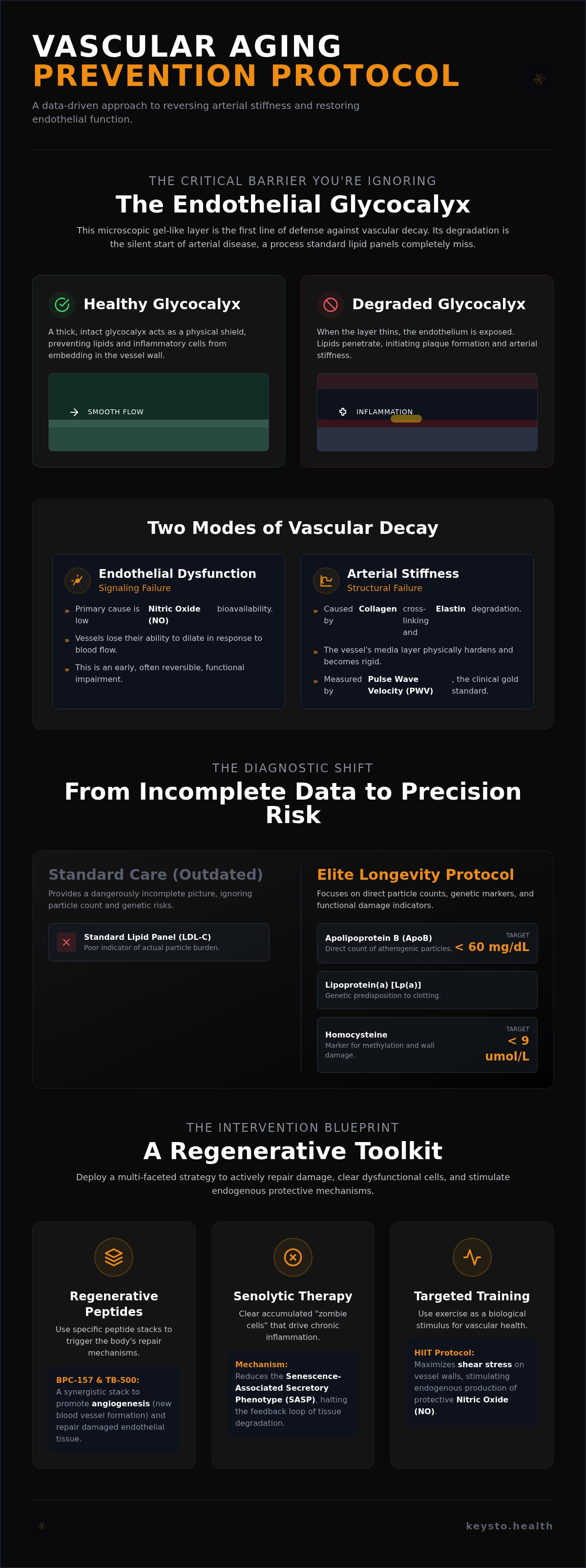
True vascular aging prevention focuses on a structure most clinicians ignore: the Endothelial Glycocalyx. This microscopic, gel-like layer lines the interior of every blood vessel. It functions as a physical shield and a molecular sieve, preventing inflammatory cells from sticking to the vessel walls. When this layer thins, the underlying endothelium becomes exposed to mechanical stress and biochemical insults.
Degradation of the glycocalyx represents the earliest stage of Endothelial Dysfunction. During this process, the body sheds Syndecan-1 and Heparan Sulfate into the systemic circulation. I monitor these biomarkers because their presence in the blood signals active vascular shedding. This structural breakdown allows lipids to penetrate the arterial wall, initiating the plaque formation process.
Arterial Stiffness vs. Endothelial Dysfunction
We must distinguish between signaling failures and structural failures. Endothelial dysfunction is primarily a signaling issue centered on Nitric Oxide (NO) bioavailability. When NO levels drop, vessels lose their ability to dilate. In contrast, arterial stiffness involves the physical hardening of the vessel's media layer. This occurs through Collagen cross-linking and the permanent degradation of Elastin fibers.
I utilize Pulse Wave Velocity (PWV) as the clinical gold standard for measuring this stiffening. PWV tracks the speed of the pressure wave traveling from the heart to the periphery. Faster waves indicate rigid vessels and a higher biological age. Maintaining vessel elasticity is the cornerstone of vascular aging prevention and long-term cardiac output.
The Role of Senescent Cells in Vascular Aging
Accumulated Senescent Cells, often called "zombie cells," drive the progression of Inflammaging within the arterial system. These cells have ceased replication but continue to exert negative biological effects. They secrete the Senescence-Associated Secretory Phenotype (SASP), a cocktail of pro-inflammatory cytokines and proteases. SASP directly degrades the surrounding healthy tissue and accelerates the breakdown of the glycocalyx.
This chronic inflammatory state creates a feedback loop that further impairs NO production and promotes calcification. We utilize specific compounds to clear these cells, as outlined in the Senolytic Protocol. Removing the senescent load is essential for restoring the regenerative capacity of the vascular endothelium and halting the aging clock.
The Vascular Health Diagnostic Checklist
Standard lipid panels provide a dangerously incomplete picture of your cardiovascular risk. Relying on LDL-C alone ignores the particle count and inherited risk factors that drive the majority of cardiac events in seemingly healthy individuals. I prioritize Apolipoprotein B (ApoB) and Lipoprotein(a) [Lp(a)] because they offer a direct count of atherogenic particles and genetic predisposition to clotting. You can assess these hidden stressors by running your data through the HRT Bloodwork Analyzer to move beyond the limitations of standard reference ranges.
Advanced Lipid and Inflammatory Markers
For aggressive vascular aging prevention, I aim for an ApoB target of less than 60 mg/dL. This level significantly reduces the probability of cholesterol particles penetrating the arterial wall. We also monitor Homocysteine; elevated levels indicate poor methylation and direct damage to the vascular wall integrity. I look for Homocysteine below 9 umol/L to ensure optimal endothelial health. Additionally, Fibrinogen levels help us track blood viscosity and systemic clot risk. High fibrinogen increases mechanical drag on the glycocalyx, accelerating its degradation.
Functional Vascular Testing
Bloodwork is only half the equation. We must measure the physical vascular age of your arteries to understand the extent of structural decay. I prefer the Carotid-Intima Media Thickness (CIMT) test over a Coronary Artery Calcium (CAC) score for early detection. A CAC score only detects hard, calcified plaque; CIMT identifies soft plaque and wall thickening before it stabilizes. For real-time data, Flow-Mediated Dilation (FMD) assesses how well your vessels dilate in response to shear stress.
Glycemic control is equally vital for structural preservation. I recommend using a Continuous Glucose Monitor (CGM) to identify post-prandial spikes. Rapid rises in blood glucose sandblast the endothelial glycocalyx, stripping away its protective layer within minutes. Keeping your glucose excursions below 140 mg/dL is a mandatory baseline for any serious longevity protocol. If your current diagnostics reveal systemic inflammation, you should evaluate our comprehensive optimization protocols to stabilize these markers and protect your endothelium.
Foundational Protocols for Arterial Elasticity
Successful vascular aging prevention requires more than just avoiding damage; you must actively provide the substrates for structural repair. I prioritize the restoration of the endothelial glycocalyx through targeted supplementation with Rhamnan Sulfate. This seaweed-derived polysaccharide acts as a building block for the heparin sulfate chains that comprise the glycocalyx matrix. We pair this with a comprehensive strategy to maximize Nitric Oxide (NO) bioavailability, ensuring vessels remain responsive to pressure changes.
Nutritional Strategies for Endothelial Support
Your diet serves as the primary source of inorganic nitrates found in arugula and beets. These compounds utilize the salivary pathway, where oral bacteria reduce nitrate to nitrite, eventually converting to NO in the blood vessels. I also enforce a low-AGE (Advanced Glycation End-products) diet to prevent the irreversible cross-linking of collagen in the arterial wall. For membrane fluidity and inflammatory control, I prescribe 3–4g of combined EPA/DHA daily to optimize the omega-3 index for vascular protection.
Lifestyle Interventions for Shear Stress
Physical interventions must generate sufficient shear stress to trigger the endothelial nitric oxide synthase (eNOS) enzyme. High-intensity interval training (HIIT) is the most efficient tool for this, creating turbulent flow that signals the vessel to dilate and reinforce its lining. Our Cardiovascular Protocol details the exact balance between Zone 2 aerobic base work and these high-intensity peaks to maximize total heart rate variability and vessel elasticity.
Environmental stressors provide additional vascular conditioning. I utilize specific thermal protocols to maximize endothelial resilience and mitochondrial health:
- Sauna Therapy: 4–7 sessions per week reduces cardiovascular mortality by up to 50% by inducing heat shock proteins and improving systemic blood flow.
- Cold Exposure: Enhances mitochondrial density in endothelial cells and improves autonomic vascular tone through vasoconstriction cycles.
- Glymphatic Recovery: Consistent deep sleep cycles allow for the clearance of metabolic waste and intensive vascular wall repair.
I've found that combining these stressors creates a synergistic effect on the vasculature. While HIIT provides the mechanical signal for repair, sauna and cold exposure provide the metabolic conditioning necessary to handle that stress. We treat these not as "wellness" activities, but as mandatory biological inputs for maintaining a youthful vascular age.
Advanced Regenerative Compounds and Peptide Stacks
Peptides represent the frontier of vascular aging prevention by offering site-specific signaling that traditional pharmaceuticals cannot replicate. While standard drugs focus on symptom management or risk mitigation, these sequences initiate actual tissue regeneration. I use the Compound Encyclopedia to vet the specific mechanisms of action for every regenerative stack we deploy. Precision is non-negotiable; ensure you utilize the Peptide Reconstitution Calculator to maintain exact dosage control in your research protocols.
The Vascular Repair Stack: BPC-157 and TB-500
The synergy between BPC-157 and TB-500 remains the gold standard for reversing structural endothelial damage. I've seen this stack significantly accelerate recovery in cases of chronic ischemia and microvascular decay. We leverage BPC-157 because it upregulates VEGFR2 expression. This process triggers the formation of new blood vessels through angiogenesis. I typically recommend a systemic dosage range of 250–500 mcg daily.
TB-500 (Thymosin Beta-4) complements this by promoting endothelial cell migration and reducing systemic vascular inflammation. We utilize a dosage of 2.5–5 mg administered twice weekly. This combination works because BPC-157 initiates the growth signal while TB-500 facilitates the physical movement of repair cells to the site of injury. Clinical observations suggest this stack is highly effective for post-ischemic recovery or addressing chronic endothelial damage that has resisted traditional interventions.
Longevity Peptides: Epitalon and GHK-Cu
Maintaining youthful elasticity requires compounds that modulate gene expression at the cellular level. Epitalon serves as a primary regulator of telomerase activity. In aging human cohorts, it has demonstrated the ability to improve the physical properties of the arterial wall and stabilize vascular function. We pair this with GHK-Cu, a copper peptide that directly stimulates collagen and elastin synthesis within the vascular media.
GHK-Cu shifts the vasculature toward a more youthful phenotype by modulating over 4,000 human genes. I use a daily dosage of 1–2 mg to reinforce the structural integrity of the vessel wall. This peptide specifically addresses the breakdown of the extracellular matrix that leads to arterial stiffening. By combining these regenerative compounds, we move beyond maintenance and into active restoration of the circulatory system.
Implementation: Your 2026 Vascular Preservation Blueprint
I've organized this protocol into four distinct phases to ensure systemic stability before introducing regenerative compounds. You can't optimize what you don't measure. We begin with Phase 1, using the HRT Bloodwork Analyzer to establish a clinical baseline for ApoB, Lp(a), and systemic inflammatory markers. This data determines the aggressiveness of the subsequent steps.
Phase 2 focuses on aggressive stressor removal. I require blood pressure to remain consistently below 120/80 to prevent mechanical damage to the vessel walls. We also utilize continuous glucose monitoring to eliminate glycemic spikes. These chemical insults strip the glycocalyx and must be neutralized before repair can begin.
Phase 3 establishes foundational support. We implement the Metabolic Protocol and daily nitric oxide precursors to restore vessel responsiveness. Once the metabolic environment is stable, we move to Phase 4. This phase introduces a 12-week regenerative cycle of BPC-157 and TB-500 to trigger active tissue repair and angiogenesis.
Monitoring and Iteration
Retest your primary biomarkers every 90 days to verify the efficacy of your vascular aging prevention strategy. I focus on ApoB, hs-CRP, and Homocysteine as the key indicators of success. You should use the Protocol Builder to adjust your compound dosing based on these objective responses. Track your exercise recovery speed and blood pressure stability as subjective indicators of improved vascular tone and elasticity.
Long-term Maintenance and Senolysis
Vascular clearance requires a periodic removal of the senescent cell burden. I integrate a quarterly senolytic protocol, typically utilizing a combination of Quercetin and Dasatinib for three consecutive days. This "hit and run" approach clears the "zombie cells" that secrete inflammatory cytokines. We also utilize NAD+ precursors to maintain high sirtuin activity, which is essential for endothelial DNA repair and mitochondrial health.
My bottom line is simple. You cannot rely on a single supplement or a generic diet to halt arterial decay. Consistency in glycocalyx protection and the aggressive management of atherogenic particles are the only ways to outrun vascular aging. Follow the data, iterate based on your bloodwork, and prioritize the structural integrity of your endothelium above all else.
Securing Your Vascular Future
True vascular aging prevention requires a transition from reactive maintenance to proactive structural optimization. We've moved beyond the era of "normal" cholesterol levels into a protocol-driven landscape where the endothelial glycocalyx is the primary target for preservation. By utilizing precise diagnostics like ApoB and Lp(a) alongside regenerative peptide stacks, you can effectively halt arterial stiffening and restore youthful vessel elasticity.
I rely on the Keys to Health framework because it integrates 25 years of performance experience with a database of 112 research compounds. We don't guess; we use AI-driven bloodwork analysis to build protocols that deliver measurable biological outcomes. Your circulatory system is the foundational architecture of your longevity, and its decay is not an inevitability of time.
Take control of your biological age by applying these clinical blueprints today. We've provided the tools and the data; the next step in your optimization journey is execution.
Frequently Asked Questions
What is the single most important marker for vascular aging?
Pulse Wave Velocity (PWV) stands as the clinical gold standard for determining your biological vascular age. While blood markers like ApoB indicate risk, PWV measures the actual physical stiffness of your arteries. Faster wave speeds correlate with rigid vessels and advanced aging. I use this metric to track the efficacy of any vascular aging prevention protocol, as it reflects structural changes in the media layer that standard lipid panels ignore.
Can BPC-157 help with high blood pressure?
Can BPC-157 help with high blood pressure?
BPC-157 doesn't act as a direct antihypertensive, but it improves blood pressure regulation by restoring endothelial function. It upregulates VEGFR2 expression to promote angiogenesis and enhances nitric oxide pathways. This repair of the vessel lining allows for better vasodilation. For healthcare professionals looking to master the complex science behind these pharmacological interventions, PharmEDU provides essential educational resources for career development. I've observed that once the structural integrity of the endothelium improves, systemic resistance often decreases. This makes it a powerful adjunct for long-term vascular health rather than a quick fix for acute spikes.
You should expect a 90 to 180 day window before seeing measurable shifts in arterial stiffness. Structural remodeling of the vascular wall involves the slow degradation of cross-linked collagen and the synthesis of new elastin. While signaling markers like nitric oxide improve within days of starting HIIT or nitrate supplementation, physical elasticity requires consistent metabolic stability. We retest primary biomarkers every three months to ensure the protocol is driving the desired structural adaptations.
Is the endothelial glycocalyx reversible?
The endothelial glycocalyx is highly dynamic and capable of rapid regeneration if you remove the primary stressors. Eliminating glycemic spikes and managing oxidative stress allows the body to rebuild this gel-like layer. I utilize Rhamnan Sulfate to provide the necessary precursors for this reconstruction. When paired with shear stress from Zone 2 exercise, the glycocalyx can begin to thicken and restore its protective barrier function within weeks of intervention.
Are there specific protocols for equine vascular health?
We offer specialized science-backed strategies for horses through our animal longevity division. Vascular health is critical for performance and recovery in senior horses and elite athletes alike. You can access the Senior Horse Longevity Protocol to address age-related circulatory decline. These guides utilize the same rigorous evidence-based approach we apply to human biohacking, tailored specifically for equine physiology and tissue regeneration requirements.
How do I use the peptide calculator for BPC-157?
Our Peptide Reconstitution Calculator ensures you achieve exact dosing for compounds like BPC-157. You simply input the total milligrams in your vial, the amount of bacteriostatic water used for reconstitution, and your target dose in micrograms. The tool then provides the exact tick mark on a standard insulin syringe. Precision is vital in vascular aging prevention research to ensure you stay within the therapeutic 250 to 500 mcg range without waste.
What is the difference between biological and chronological vascular age?
Chronological vascular age is simply the number of years you've been alive, while biological age reflects the actual functional state of your arteries. A 40-year-old with significant calcification and high PWV might have a biological vascular age of 60. I focus on biological markers because they are modifiable through the protocols we've discussed. Your goal is to keep your biological age significantly lower than your chronological age to ensure long-term cardiovascular resilience.
Can I stack peptides with standard blood pressure medication?
Stacking regenerative peptides with standard blood pressure medication is generally feasible, but you must monitor for synergistic effects. Compounds like BPC-157 and nitric oxide precursors improve natural vasodilation, which can potentially lead to hypotension if your pharmaceutical dose isn't adjusted. I recommend tracking your blood pressure daily during the first 30 days of any new peptide cycle. This data allows for precise titration of your existing medications as your underlying vascular function improves.

Article by
Samir Levin
Samir Levin is a biohacker and longevity researcher with 25 years of personal experimentation across peptides, hormonal optimization, and regenerative medicine. He is the founder of Keys to Health — a platform combining a 112-compound research encyclopedia, AI-powered bloodwork analyzer, peptide protocol builder, and evidence-based PDF protocols used by thousands of biohackers worldwide.
Samir's work is grounded in first-person experimentation, not theory. He personally reversed 10+ years of AAS-induced gynecomastia without surgery using an enzymatic stack he developed and documented. His protocols are built from clinical literature, N=1 data, and feedback from the Keys to Health community.
He covers peptides, TRT/HRT, GLP-1 agents, senolytics, longevity stacks, cognitive enhancement, and animal longevity protocols for dogs, cats, and horses.
vascular aginglongevitybiohackingpeptidesBPC-157arterial stiffnessendothelial healthcardiovascular optimization