Longevity
NAD+ 500mg Reconstitution Calculator: Precision Math for Longevity Research
By Samir Levin · August 21, 2026 · 17 min read
Disclaimer
This article is for informational and educational purposes only. It does not constitute medical advice, diagnosis, or treatment. Always consult a qualified healthcare provider before starting any new supplement, peptide, or protocol. Keys to Health and Samir Levin are not responsible for any actions taken based on this content.
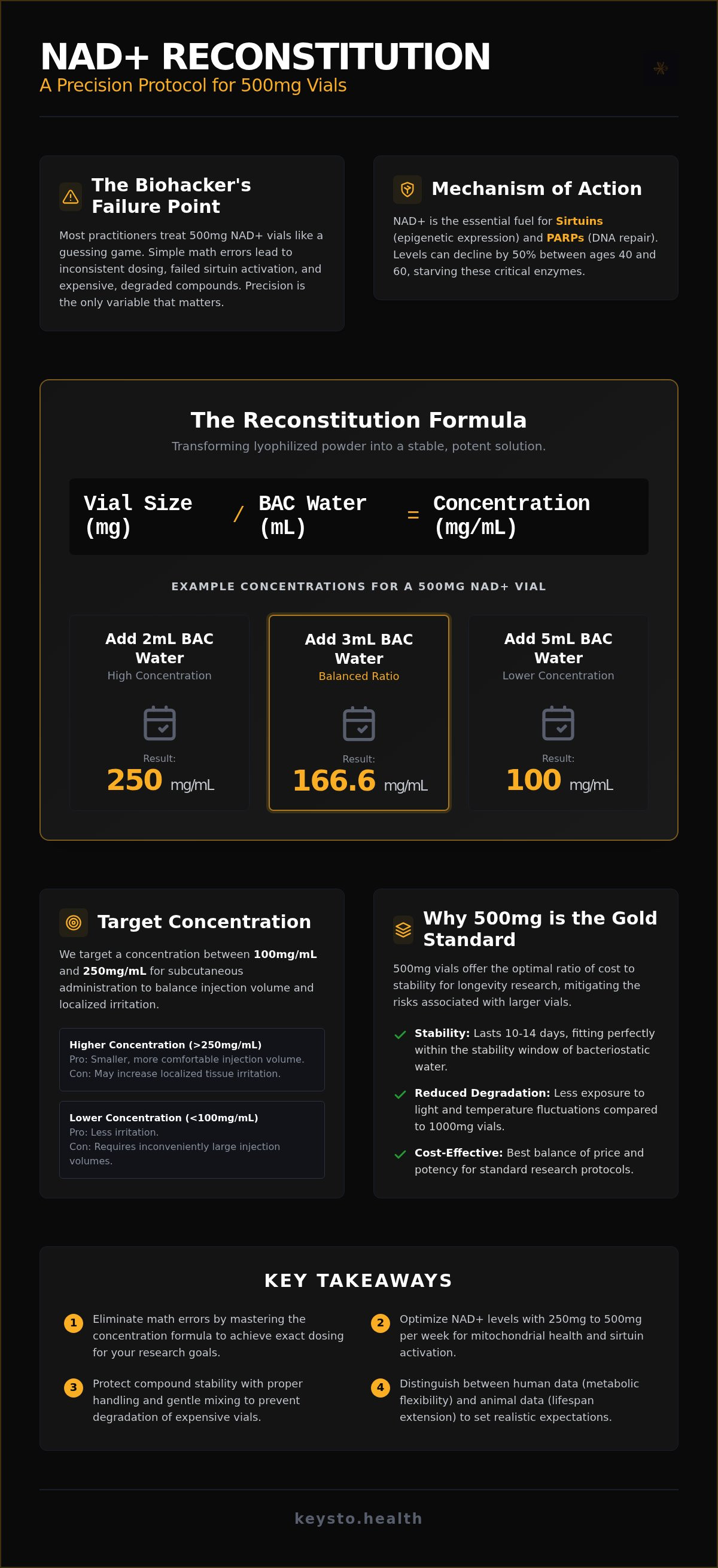
Precision is the only variable that separates a successful longevity protocol from an expensive mistake. Most practitioners treat their 500mg NAD+ vials like a guessing game, essentially risking a significant investment with every imprecise pull of the syringe. I've seen even experienced biohackers stumble over the math, confused by the shift from milligrams to micrograms or the solubility limits of bacteriostatic water. You've likely felt that same hesitation, wondering if your mixing ratio will actually trigger the sirtuin activation required for DNA repair or simply result in a degraded, useless solution.
We've developed this nad+ 500mg reconstitution calculator framework to eliminate that uncertainty and provide a repeatable, clinical-grade protocol for your research. You'll master the exact math needed to transform lyophilized powder into a stable, potent tool for biological optimization. This guide covers the specific volume requirements for 500mg vials, the molecular stability of Nicotinamide Adenine Dinucleotide post-reconstitution, and how to integrate these doses into a comprehensive longevity stack. We're moving past the guesswork to focus on the data-driven precision your cellular health demands.
Key Takeaways
- Eliminate math errors by mastering the concentration formula for 500mg vials. Our nad+ 500mg reconstitution calculator ensures you achieve the exact concentration required for your specific research goals.
- Distinguish between the restoration and maintenance phases to optimize Nicotinamide Adenine Dinucleotide levels for mitochondrial health. Most human optimization protocols utilize a range of 250mg to 500mg per week to drive sirtuin activation.
- Protect the stability of your compound by following clinical standards and gentle mixing techniques. Proper handling prevents the degradation of expensive 500mg vials and ensures maximum biological optimization.
- Transition from manual math to the AI Peptide Protocol Builder for error-free scaling of your longevity stacks. Use the Compound Encyclopedia to cross-reference NAD+ with 112 other compounds for synergistic performance results.
Table of Contents
The Clinical Necessity of Precision NAD+ Reconstitution
Precision is the foundation of every elite protocol we design at Keys to Health. Nicotinamide adenine dinucleotide (NAD+) is the primary coenzyme required for mitochondrial respiration and cellular energy transfer. When you miscalculate the volume of your diluent, you compromise the entire metabolic intervention; this is why a dedicated nad+ 500mg reconstitution calculator is a non-negotiable tool. We prioritize accuracy because it's the only way to ensure your cellular saturation levels reach the necessary threshold for biological optimization.
The Biohacker’s Failure Point occurs when math errors meet expensive compounds. Improperly reconstituted NAD+ leads to inconsistent dosing that fails to trigger the desired epigenetic response. We use the 500mg vial size specifically to mitigate these risks. It offers the best ratio of cost to stability for the protocols found in our Longevity Protocol, ensuring that the compound remains potent throughout the duration of the cycle.
Why 500mg is the Gold Standard for NAD+ Research
500mg vials represent the sweet spot for research stability. While 1000mg vials might seem cost-effective, the longer exposure to light and temperature fluctuations often leads to compound degradation before the vial is empty. A 500mg unit typically lasts 10 to 14 days in a standard research protocol, fitting perfectly within the stability window of bacteriostatic water. Our Peptide Reconstitution Calculator helps you hit these precise targets without the risk of oxidation.
NAD+ is highly soluble in bacteriostatic water, but maintaining a specific concentration is vital for both comfort and absorption. High concentrations can cause localized irritation, while overly diluted solutions require inconveniently large injection volumes. Using a nad+ 500mg reconstitution calculator allows you to find the exact balance between solubility and volume. This ensures the Nicotinamide Adenine Dinucleotide remains stable and effective for the life of the vial.
The Mechanism of Action: Sirtuins and PARPs
NAD+ acts as the essential substrate for Sirtuins, the enzymes responsible for epigenetic expression and longevity. It also fuels PARP (Poly ADP-ribose polymerase) enzymes, which are the primary drivers of DNA repair within the cell. As we age, NAD+ levels decline by as much as 50 percent between the ages of 40 and 60. This depletion starves these critical enzymes, leading to mitochondrial dysfunction and accelerated metabolic aging.
We must distinguish between human and animal research data to set realistic expectations. While rodent studies show dramatic lifespan increases, human data focuses on functional outcomes like insulin sensitivity and cognitive clarity. In human trials involving cohorts of 50 to 100 participants, researchers observed that maintaining high systemic NAD+ levels supports metabolic flexibility. You can find a deeper analysis of these pathways in our Compound Encyclopedia.
Calculating the 500mg NAD+ Reconstitution Math
Reconstitution is the most critical technical step in longevity research. The fundamental formula for any nad+ 500mg reconstitution calculator is: Vial Size (mg) / BAC Water Volume (mL) = Concentration (mg/mL). If you miscalculate this initial ratio, every subsequent dose in your protocol will be fundamentally flawed. We prioritize these calculations to ensure that the cellular saturation targets we establish in the lab are actually met during implementation.
- 500mg Vial + 2mL BAC Water = 250mg/mL
- 500mg Vial + 3mL BAC Water = 166.6mg/mL
- 500mg Vial + 5mL BAC Water = 100mg/mL
Determining Your Target Concentration
We typically target a concentration between 100mg/mL and 250mg/mL for subcutaneous administration. This range balances the volume-to-pain ratio. Higher concentrations allow for smaller, more comfortable injection volumes but may increase localized tissue irritation. If you prefer a hands-off approach to the math, use our Peptide Calculator for automated precision.
Concentration selection also depends on your specific dosing frequency. If your protocol calls for high-frequency administration, a more dilute solution (100mg/mL) might be easier to measure accurately on a standard syringe. Conversely, if you are running a high-dose restoration phase, a 250mg/mL concentration keeps the total fluid volume manageable. This tactical decision directly impacts the long term sustainability of your research.
Unit Conversion: Mg to Units on an Insulin Syringe
Syringe units are often the source of profound dosing errors. On a standard U-100 syringe, 100 units equals 1mL of fluid. If your concentration is 100mg/mL (500mg in 5mL), then 10 units on the syringe represents exactly 10mg of NAD+. If you've opted for a more concentrated 250mg/mL solution, those same 10 units now represent 25mg.
I frequently see researchers confuse 0.5mL with 0.5 units on a syringe. A 0.5mL pull is 50 units, not 0.5 units. You must also ensure you aren't using U-40 syringes, which are calibrated for a different concentration entirely. Using U-40 syringes with U-100 math will result in a 2.5x dosing error. For precise implementation within a broader health framework, consider reviewing our biological optimization protocols.
Clinical Dosing Protocols: From Maintenance to Restoration
Establishing your concentration with a nad+ 500mg reconstitution calculator is merely the technical prelude to the actual intervention. We categorize NAD+ protocols into two distinct functional states: the restoration phase and the maintenance phase. Your choice between these depends on your current systemic pool and your specific performance objectives. We prioritize objective data over subjective feeling, so we always recommend baseline testing to determine your starting point.
The NAD+ Flush is a common side effect during high-dose administrations, characterized by transient nausea, chest pressure, or flushing. This phenomenon occurs because of the rapid elevation of systemic levels, which can temporarily overwhelm cellular uptake mechanisms. Increasing the frequency of smaller doses, rather than one large bolus, effectively mitigates these side effects while maintaining the total weekly flux. We track the effectiveness of these adjustments by analyzing key metabolic markers through our HRT Bloodwork Analyzer.
The Restoration Protocol (High Flux)
The Restoration Phase is a high-flux intervention designed for rapid systemic saturation. We typically utilize a dose of 500mg per week, split into two 250mg administrations. This approach is essential for researchers recovering from high-intensity training cycles or chronic oxidative stress. For those focused on peak physical output, we integrate this into our Energy & Endurance Protocol to maximize mitochondrial respiration during competitive windows.
Human research data indicates that higher weekly doses are often necessary to move the needle on systemic Nicotinamide Adenine Dinucleotide levels after the age of 45. While animal studies often use massive relative doses to show lifespan extension, human optimization requires a more nuanced balance to avoid over-taxing methylation pathways. We recommend monitoring homocysteine and methyl donor levels when running high-flux restoration protocols for extended periods.
The Longevity Maintenance Protocol
Once you've achieved saturation, you shift to the Maintenance Phase. This involves a lower range of 100mg to 200mg per week. The goal here is the chronic support of mitochondrial biogenesis and the continuous fueling of Sirtuins for epigenetic stability. This strategy forms the backbone of our Longevity Protocol, focusing on long-term healthspan rather than immediate metabolic surges.
Consistent, moderate dosing is superior to sporadic high-dose infusions for maintaining PARP-mediated DNA repair. By keeping the systemic pool steadily elevated, you ensure that these enzymes have a constant supply of substrate for genomic maintenance. This protocol is sustainable for long-term research and minimizes the risk of the side effects associated with higher-flux interventions. Use your nad+ 500mg reconstitution calculator to adjust your concentration so these smaller doses remain easy to measure on a standard syringe.
Step-by-Step Reconstitution and Synergistic Stacking
Reconstitution is a mechanical process where precision meets molecular stability. Shaking a vial is the fastest way to shear delicate molecular bonds and degrade your compound before it ever reaches your system. I maintain a Clean Room standard even in a home setting to prevent microbial contamination and ensure the structural integrity of the Nicotinamide Adenine Dinucleotide solution. Using our nad+ 500mg reconstitution calculator ensures you have the exact volume requirements finalized before you even break the seal on your bacteriostatic water.
The shelf life of reconstituted NAD+ is limited by its susceptibility to oxidation and temperature fluctuations. While lyophilized powder is stable for months, the liquid form typically remains viable for 30 to 60 days when stored at a constant 2 to 8 degrees Celsius. We monitor the clarity of the solution; any cloudiness or precipitate indicates that the compound has fallen out of solution or has been compromised by bacterial growth. Accuracy in the initial mixing phase is the only way to guarantee this window of potency.
The Reconstitution Procedure
- Sanitize the vial stoppers of both the 500mg NAD+ and the bacteriostatic water using 70% isopropyl alcohol.
- Equalize the pressure in the 500mg vial by drawing a volume of air equal to your diluent target into the syringe and injecting it into the vial.
- Slow-drip the bacteriostatic water down the internal side of the glass vial rather than injecting it directly onto the powder cake.
Once the water is added, utilize the gentle roll and swirl method. Do not shake the vial. Gently rotate the vial between your palms until the powder is completely dissolved into a clear solution. This patience prevents the mechanical stress that leads to compound degradation. If you are unsure about the required diluent volume for your specific syringe type, refer back to the nad+ 500mg reconstitution calculator data to confirm your math.
Synergistic Stacks: NAD+ with BPC-157 and TB-500
We rarely use NAD+ in isolation when the goal is systemic tissue repair. Stacking NAD+ with BPC-157 is a tactical choice to mitigate localized inflammation and "stinging" often associated with the acidic pH of concentrated NAD+ injections. BPC-157 acts as a cytoprotective agent, accelerating the healing of the injection site while complementing the metabolic benefits of the coenzyme. In human trials involving small cohorts, BPC-157 has demonstrated significant angiogenic properties that support nutrient delivery to recovering tissues.
We also integrate TB-500 to enhance vascular health and cellular migration alongside NAD+ metabolic support. While NAD+ fuels the mitochondria, TB-500 (Thymosin Beta-4) promotes the upregulation of actin, which is essential for cellular structure and mobility. This combination is a cornerstone of our Regenerative Protocol, designed for athletes and researchers who require rapid recovery from high-intensity physiological stress. The synergy between these compounds creates a comprehensive environment for both energy production and structural repair.
Scaling Your Protocol: Using Keysto.health Precision Tools
Manual math serves as an essential baseline for any serious researcher. Once you've mastered the nad+ 500mg reconstitution calculator, the next logical step is moving toward a systems-based approach to biological optimization. We don't just look at a single vial in isolation; we view it as one component of a larger, data-driven architecture. This is where we transition from basic arithmetic to comprehensive protocol management.
Closing the loop on your protocol requires constant iteration based on measurable outcomes. We use the data from our analyzer tools to determine if a 500mg vial schedule needs to be compressed or extended. If your markers indicate high oxidative stress, we might increase the frequency of your restoration phase. This level of granular control is what separates elite performance architects from those simply following generic internet advice. We've spent 25 years refining these tools so you don't have to rely on trial and error.
Beyond the Calculator: The Protocol Builder
Our AI Peptide Protocol Builder takes the guesswork out of complex stack design. It accounts for variables like body weight, age, and your specific optimization goals to refine your dosing schedule. While the math ensures accuracy, we also prioritize tracking subjective markers like sleep quality and cognitive focus to adjust the flux of your Nicotinamide Adenine Dinucleotide pool. This integrated approach is a core feature of our Metabolic Protocol.
The Compound Encyclopedia is your primary resource for verifying how NAD+ interacts with the 112 compounds we track. For example, understanding how NAD+ affects the methylation cycle when paired with high-dose B-vitamins is crucial for avoiding fatigue. We also apply these rigorous standards to the Canine Longevity Protocols. Applying the nad+ 500mg reconstitution calculator logic to animal research requires adjusting for surface area to mass ratios, ensuring our companions receive the same optimization benefits as we do.
Bottom Line: Key Takeaways
- Precision in the 500mg NAD+ reconstitution process prevents compound waste and ensures biological efficacy.
- Concentration selection (mg/mL) is the primary variable for injection comfort and cellular absorption.
- Always prioritize gentle mixing and cold storage to maintain the stability of your reconstituted compound.
- Synergistic stacking with BPC-157 and TB-500 maximizes the regenerative potential of your NAD+ protocol.
Mastering Your Cellular Architecture
Precision is the final bridge between theoretical longevity and measurable biological results. By utilizing a nad+ 500mg reconstitution calculator, you eliminate the mathematical uncertainty that leads to under-dosing or compound degradation. We've established that concentration selection directly dictates both injection comfort and the rate of sirtuin activation. Whether you're in a high-flux restoration phase or a steady-state maintenance cycle, your protocol's success hinges on these tactical details. I've spent 25 years refining these frameworks to ensure every milligram reaches its cellular target.
We prioritize clinical-grade standards across our database of 112 research compounds. Our expert human optimization blueprints and AI-driven bloodwork analysis provide the structure needed for elite-level performance. You've now mastered the math and the mechanisms; it's time to implement these strategies with total confidence. We architect peak performance through rigorous data and proven protocols.
Biological optimization is a continuous process of data-driven refinement. We're here to provide the blueprints for your next metabolic breakthrough.
Frequently Asked Questions
How much bacteriostatic water should I add to a 500mg NAD+ vial?
Standard practice for a 500mg vial is 2mL to 5mL of bacteriostatic water. Adding 2mL creates a concentration of 250mg/mL, which is ideal for minimizing injection volume but may increase localized stinging. If you prefer a more comfortable, albeit larger volume, 5mL of diluent results in a 100mg/mL concentration. You can finalize these variables using our nad+ 500mg reconstitution calculator to ensure your math aligns with your syringe capacity.
Can I use sterile water instead of bacteriostatic water for NAD+?
We do not recommend sterile water for multi-dose vials because it lacks a preservative to prevent bacterial growth. Bacteriostatic water contains 0.9% benzyl alcohol, which inhibits the proliferation of contaminants after the stopper has been punctured. Since a 500mg vial typically requires multiple administrations over several days, sterile water would compromise the safety and stability of the compound. Always prioritize bacteriostatic water to maintain the integrity of your longevity research.
How long does a reconstituted 500mg NAD+ vial last in the fridge?
A reconstituted NAD+ vial remains stable for 30 to 60 days when stored at a constant temperature between 2 and 8 degrees Celsius. Beyond this window, the compound begins to oxidize and lose biological potency. We monitor for any changes in clarity or the appearance of particulates, which indicate degradation. Using a nad+ 500mg reconstitution calculator helps you plan your dosing schedule so you consume the vial within this optimal stability timeframe.
What is the best dose of NAD+ for anti-aging research?
Human optimization protocols typically utilize a range of 100mg to 250mg per administration, two to three times per week. For an initial restoration phase, we often see researchers push toward 500mg per week to rapidly elevate the systemic pool. Maintenance phases generally settle at 100mg to 200mg per week to sustain sirtuin activity. These ranges are based on clinical observations of metabolic flexibility and mitochondrial health in adults aged 40 to 65.
Why does NAD+ cause a "flush" sensation after injection?
The "flush" sensation results from the rapid elevation of systemic NAD+ levels, which can trigger transient side effects like nausea, chest pressure, or warmth. This occurs because the coenzyme influences cellular energy transfer and blood flow dynamics almost immediately. If the sensation is too intense, we recommend splitting your total weekly dose into smaller, more frequent administrations. This strategy maintains high systemic flux while keeping individual bolus amounts below the threshold of discomfort.
Can I mix NAD+ with other peptides in the same syringe?
We generally advise against mixing NAD+ with other compounds in the same syringe due to potential pH incompatibilities. NAD+ solutions are notoriously acidic, which can cause other delicate peptides like BPC-157 or TB-500 to precipitate or degrade instantly. While these compounds are highly synergistic when administered separately, they should be drawn into separate syringes or injected into different sites. This practice protects the structural integrity and biological efficacy of each specific compound in your stack.
How do I calculate 50mg from a 500mg vial on an insulin syringe?
Your calculation depends entirely on the volume of bacteriostatic water added during reconstitution. If you added 5mL of water to your 500mg vial, your concentration is 100mg/mL; therefore, a 50mg dose equals 0.5mL, or 50 units on a U-100 syringe. If you used 2mL of water (250mg/mL), a 50mg dose would be only 0.2mL, or 20 units. Always verify your concentration before drawing the solution to avoid significant dosing errors.
Is NAD+ 500mg safe for senior dog longevity protocols?
We have successfully integrated NAD+ into our Canine Longevity Protocols to support mitochondrial health in aging animals. However, dosing for dogs is significantly lower than for humans and must be calculated based on the animal's weight and metabolic rate. We typically see research doses ranging from 0.5mg to 2mg per pound of body weight. Precision is vital here, as animals can be more sensitive to the "flush" side effects than human subjects.

Article by
Samir Levin
Samir Levin is a biohacker and longevity researcher with 25 years of personal experimentation across peptides, hormonal optimization, and regenerative medicine. He is the founder of Keys to Health — a platform combining a 112-compound research encyclopedia, AI-powered bloodwork analyzer, peptide protocol builder, and evidence-based PDF protocols used by thousands of biohackers worldwide.
Samir's work is grounded in first-person experimentation, not theory. He personally reversed 10+ years of AAS-induced gynecomastia without surgery using an enzymatic stack he developed and documented. His protocols are built from clinical literature, N=1 data, and feedback from the Keys to Health community.
He covers peptides, TRT/HRT, GLP-1 agents, senolytics, longevity stacks, cognitive enhancement, and animal longevity protocols for dogs, cats, and horses.
NAD+reconstitutionlongevitybiohackingdosing protocolsirtuinsmitochondrial healthpeptide calculator