Longevity
Human Biohacking & Longevity Protocols: The Clinical Framework for Biological Optimization
By Samir Levin · August 10, 2026 · 16 min read
Disclaimer
This article is for informational and educational purposes only. It does not constitute medical advice, diagnosis, or treatment. Always consult a qualified healthcare provider before starting any new supplement, peptide, or protocol. Keys to Health and Samir Levin are not responsible for any actions taken based on this content.
Biohacking isn't a wellness trend. It's a clinical engineering project requiring precise data and rigorous protocol adherence. You've likely felt the frustration of information overload or the fear of suboptimal hormonal health while trying to navigate conflicting advice. I've spent 25 years refining human biohacking & longevity protocols to move beyond the noise and into the realm of measurable, elite-level results.
You deserve a roadmap that replaces guesswork with authoritative precision. I'll provide the blueprints to master the data-driven protocols and advanced research tools required to engineer a high-performance lifespan. We'll focus on the technical depth of peptide reconstitution, hormone management, and complex bloodwork interpretation without the usual industry fluff.
This guide functions as a manual for your biological optimization. We'll examine the specific mechanisms of action for key compounds and the exact diagnostic markers you need to track for long-term health. By the end, you'll have the confidence to manage your own biology with the certainty of a professional strategist.
Key Takeaways
- Shift from reactive healthcare to proactive biological engineering by implementing iterative, data-backed assessment cycles.
- Master the foundational pillars of vascular, metabolic, and cognitive health through evidence-based human biohacking & longevity protocols.
- Eliminate interpretation bias by using AI-driven diagnostics to identify performance gaps that standard lab panels often overlook.
- Navigate the complex landscape of peptides and hormones using a clinical Compound Encyclopedia to verify specific mechanisms of action.
- Develop a structured 12-month roadmap for biological optimization that integrates elite research tools with professional consultation.
Table of Contents
- The Clinical Framework for Biological Optimization and Longevity
- Core Longevity Protocols: Vascular, Metabolic, and Cognitive Health
- AI-Driven Diagnostics: The Role of Bloodwork in Protocol Design
- Advanced Compound Research: Navigating Peptides and Hormones
- Implementing the Keys to Health Longevity Blueprint
The Clinical Framework for Biological Optimization and Longevity
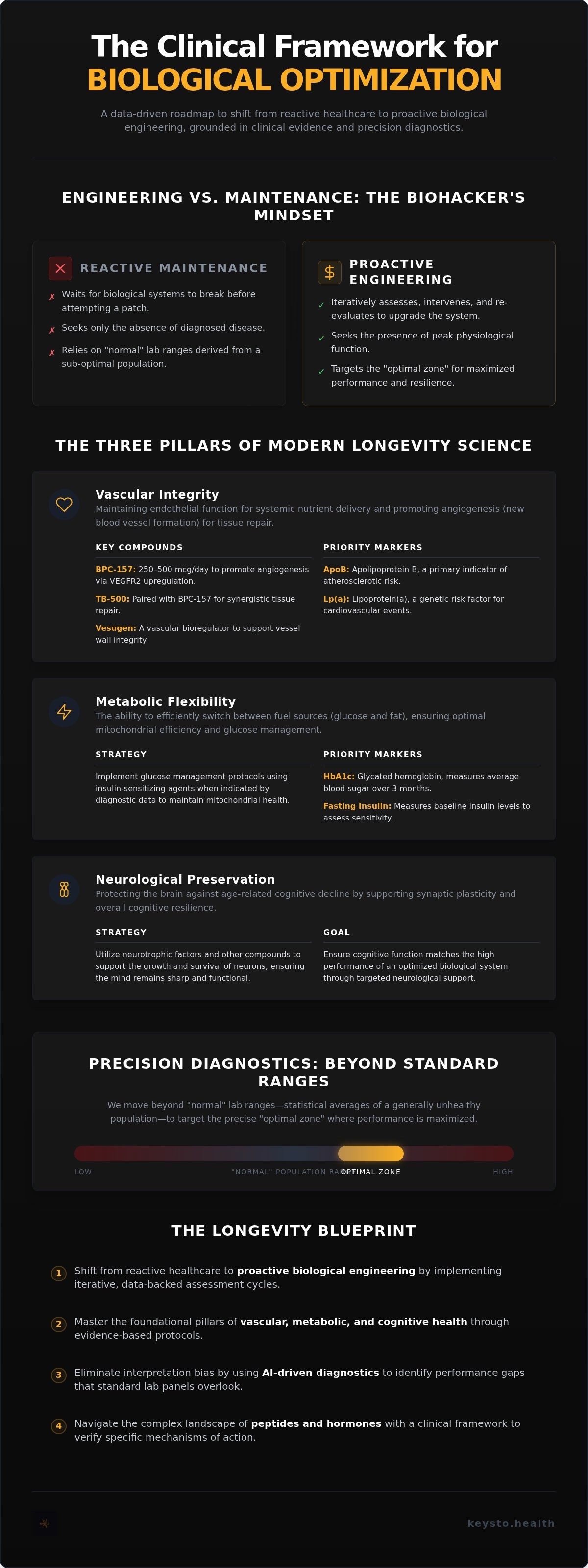
Reactive medicine is a failure of imagination. It waits for the biological system to break before attempting a patch. In my 25 years as an Elite Performance Architect, I've seen that true healthspan extension requires a shift to biological engineering. We don't just maintain; we optimize. This requires human biohacking & longevity protocols that function as iterative, data-backed cycles of assessment, intervention, and re-evaluation.
The 2026 standard for human optimization is no longer speculative. It's grounded in clinical evidence and precision diagnostics. We use tools like the HRT Bloodwork Analyzer to move beyond "normal" lab ranges. These ranges are often just statistical averages of a sub-optimally healthy population. We target the "optimal" zone where performance is maximized and cellular decay is minimized.
Engineering vs. Maintenance: The Biohacker’s Mindset
A maintenance mindset seeks the absence of disease. An engineering mindset seeks the presence of peak function. This distinction is central to body hacking, where we treat the human frame as an upgradeable system. When I review bloodwork, I'm not looking for markers that fall within a "safe" range. I'm looking for the specific data points that signal metabolic efficiency and hormonal peak.
Transitioning from general wellness to specialized biological protocols means moving away from generic advice. You aren't just "taking vitamins." You're deploying specific compounds to target cellular pathways. Every intervention must be justified by a baseline measurement and a clear mechanism of action.
The Three Pillars of Modern Longevity Science
To build a high-performance lifespan, we prioritize three physiological foundations. These pillars dictate how your body handles stress, energy, and repair:
- Vascular Integrity: Maintaining endothelial function is vital for systemic nutrient delivery. Compounds like BPC-157 (250–500 mcg/day) promote angiogenesis via VEGFR2 upregulation. In rodent studies, such as those by Sikiric et al., this peptide demonstrated accelerated healing of gastric ulcers and tendons. Human practitioners often pair it with TB-500 for synergistic tissue repair.
- Metabolic Flexibility: This is the ability to switch between fuel sources efficiently. Optimizing this involves glucose management protocols to ensure mitochondrial efficiency. We often look at HbA1c and fasting insulin to determine the need for insulin-sensitizing agents.
- Neurological Preservation: Protecting the brain against age-related decline is non-negotiable. We use neurotrophic factors to support synaptic plasticity and cognitive resilience. This ensures the mind remains as sharp as the optimized body.
You can find the technical breakdown of these strategies in our Longevity Protocol. This framework ensures every intervention is measurable and justified by clinical data rather than guesswork.
Core Longevity Protocols: Vascular, Metabolic, and Cognitive Health
Vascular, metabolic, and cognitive decline are the primary drivers of all-cause mortality. To engineer a high-performance lifespan, we must move beyond the basic avoidance of disease. I implement human biohacking & longevity protocols that prioritize systemic integrity through targeted pharmacological and lifestyle interventions. The establishment of the Human Longevity Laboratory at Northwestern underscores the shift toward clinical validation of these interventions, moving them from fringe theory to structured practice.
Vascular Health Biohacking: Beyond Blood Pressure
Standard blood pressure readings are a lagging indicator of cardiovascular health. We prioritize markers like ApoB and Lp(a) to assess actual atherosclerotic risk. Endothelial function is the gatekeeper of nutrient delivery. I often utilize vascular bioregulators like Vesugen (a short-chain peptide) to support the structural integrity of the vessel walls. These compounds work by stimulating protein synthesis in the vascular endothelium, promoting repair and maintaining elasticity.
Preventing arterial calcification requires a synergy of Vitamin K2 (specifically the MK-7 variant) and Vitamin D3. This combination ensures that calcium is directed to the bone matrix rather than the arterial walls. For those with elevated Coronary Artery Calcium (CAC) scores, we look at more aggressive cardiovascular protocols to arrest progression.
Metabolic Stability and Mitochondrial Optimization
Metabolic health is defined by insulin sensitivity and the ability to oxidize fat efficiently. We target the AMPK pathway to enhance glucose uptake and mitochondrial biogenesis. Agents like Metformin or its natural analog, Berberine, function as insulin sensitizers by inhibiting mitochondrial complex I. This mild stress triggers a compensatory increase in cellular energy efficiency.
Mitochondrial decline is often linked to the depletion of NAD+ levels. I utilize NAD+ precursors like Nicotinamide Mononucleotide (NMN) to bolster the pool of available coenzymes for sirtuin activation and DNA repair. Our Compound Encyclopedia details 112 research compounds, providing the technical data needed to select metabolic agents with precision. These pharmacological tools must be paired with high-intensity interval training (HIIT) and zone 2 cardio to maximize mitochondrial density.
Cognitive preservation requires a neuroprotective blueprint that addresses both inflammation and synaptic plasticity. We often integrate peptides like Cerebrolysin, which acts as a neurotrophic factor to support neuronal survival. The synergy between these advanced compounds and fundamental lifestyle variables like deep sleep architecture is non-negotiable. If you are ready to build a data-backed roadmap for your own biology, you can start by exploring our comprehensive longevity protocols.
AI-Driven Diagnostics: The Role of Bloodwork in Protocol Design
Most physicians treat bloodwork as a binary switch. You're either "normal" or you're "diseased." This categorical approach is useless for biological optimization. Manual interpretation is prone to human bias and often ignores sub-clinical trends that signal impending performance plateaus. I've found that leveraging AI to analyze standard lab panels reveals subtle gaps that even experienced practitioners miss. For human biohacking & longevity protocols to succeed, we must move to a model of quarterly testing to validate every intervention.
Precision Analysis with the AI Bloodwork Analyzer
The AI Bloodwork Analyzer identifies correlations across multiple markers that humans simply cannot track simultaneously. Evaluating Total Testosterone in isolation is a common mistake. We must analyze the relationship between Sex Hormone Binding Globulin (SHBG) and albumin to calculate the Free Androgen Index (FAI). This determines the actual bioavailability of the hormone at the cellular level.
AI-driven diagnostics also enable predictive modeling. By tracking the rate of change in markers like cystatin C or HbA1c, we can forecast long-term health outcomes. This data-first approach allows us to adjust hormone protocols before symptoms of deficiency or excess manifest. We don't guess; we calculate. The goal is to identify a performance gap before it becomes a clinical pathology.
Identifying Performance Gaps in Elite Athletes
High-performance individuals require a granular set of biomarkers to manage the stress of elite training. We prioritize High-Sensitivity C-Reactive Protein (hs-CRP) as a primary indicator of systemic inflammation and recovery status. A meta-analysis published in the Journal of the American College of Cardiology by Kasapis and Thompson (2005), which reviewed data from over 10,000 subjects, confirmed that physical activity significantly modulates hs-CRP levels. If your hs-CRP is climbing despite "optimal" training, your recovery protocol is failing.
This objective data justifies specific compound selection and dosage adjustments. If inflammatory markers remain high, we might increase the frequency of regenerative peptides or adjust caloric partitioning. Using the Protocol Builder ensures that these adjustments are rooted in your specific lab data rather than generic templates. This integration between diagnostic data and pharmacological intervention is the hallmark of elite biological engineering.
Advanced Compound Research: Navigating Peptides and Hormones
Peptides aren't supplements. They are precise signaling molecules that target specific cellular pathways with high affinity. To successfully integrate these into human biohacking & longevity protocols, you must move past anecdotal forum posts and focus on clinical mechanisms of action. My 25 years of experience have taught me that the difference between biological optimization and research failure lies in technical precision and data integrity.
The Clinical Standard for Peptide Reconstitution
The math of reconstitution is the most common point of failure for independent researchers. A slight miscalculation in diluent volume leads to significant dosing variance, which compromises your data. I use the Peptide Reconstitution Calculator to ensure every microgram is accounted for before research begins.
You must track three critical variables for every vial:
- Total Vial Quantity: The lyophilized powder weight, typically measured in milligrams (mg).
- Diluent Volume: The amount of Bacteriostatic Water or Sterile Saline added, measured in milliliters (mL).
- Target Dose: The specific amount of the compound required for the protocol, calculated in micrograms (mcg).
Avoid the common mistake of vigorous shaking. Peptides are fragile sequences of amino acids that can denature under mechanical stress. Always allow the diluent to trickle down the side of the glass vial and let the compound dissolve naturally to maintain its structural integrity.
Researching the Compound Encyclopedia
Our Compound Encyclopedia provides a deep dive into the mechanisms of 112 research compounds. We prioritize compounds with a clear mechanism of action (MOA). For instance, BPC-157 (Body Protection Compound) promotes tissue repair by upregulating growth hormone receptors in fibroblasts and enhancing the expression of VEGFR2 to stimulate angiogenesis. I often stack this with TB-500 for synergistic effects.
TB-500 is a synthetic version of Thymosin Beta-4. Its primary MOA is the sequestration of G-actin, which promotes cell migration and prevents inflammatory damage in cardiac and musculoskeletal tissues. While BPC-157 handles the structural repair, TB-500 ensures the necessary cellular components reach the injury site efficiently. This pairing is a staple in high-stakes recovery protocols.
We also distinguish between systemic and localized optimization. Compounds like Ipamorelin, a growth hormone secretagogue, act systemically on the pituitary gland to increase IGF-1 levels. Other bioregulators are better suited for targeting specific organ systems. If you're ready to move from theory to application, you can access our human biohacking & longevity protocols to begin your optimization journey.
Implementing the Keys to Health Longevity Blueprint
Execution is where theoretical research meets biological reality. A 12-month optimization roadmap isn't a static document; it's a dynamic engineering cycle. I structure these roadmaps to prioritize specific physiological objectives in 90-day blocks to prevent systemic overwhelm. Transitioning from a novice researcher to an elite performance architect requires moving beyond isolated biohacks and into integrated human biohacking & longevity protocols that address the body as a unified system.
Building Your First Advanced Protocol
Success begins with objective selection. You must identify a primary goal: fat loss, muscle hypertrophy, or neurological repair. Attempting to optimize everything simultaneously leads to muddy data and poor adherence. I recommend layering your tools in a specific order to ensure research integrity:
- Baseline Assessment: Use the HRT Bloodwork Analyzer to identify your current physiological floor.
- Compound Selection: Match your goals to the mechanisms found in the Compound Reference.
- Precision Dosing: Utilize the Peptide Calculator to eliminate reconstitution errors.
- The Assess-Adjust Loop: Re-test biomarkers every quarter to validate the efficacy of your current stack.
If your quarterly labs show a rise in inflammatory markers like hs-CRP or a stall in hormonal optimization, you must adjust the variables. We don't guess based on how we feel. We pivot based on what the data dictates.
The Keys to Health Ecosystem
High-stakes biohacking often requires professional consultation to navigate complex hormonal and peptide interactions. I've spent 25 years refining these frameworks to ensure they are both safe and effective for high-performance individuals. Our ecosystem provides the technical blueprints needed to manage your healthspan with clinical confidence.
We also advocate for a holistic household approach. Biological systems share fundamental pathways of decay and repair across species. You can expand your optimization efforts by integrating Animal Longevity and Recovery protocols for your dogs, cats, or horses. Whether it's a horse's joint health or your own cognitive resilience, the standard of care remains the same: data, precision, and clinical evidence.
The tools for biological engineering are now within your reach. You have the diagnostics, the calculators, and the protocol blueprints. Access our full suite of Human Biohacking & Longevity Protocols and start your biological optimization journey today.
Mastering Your Biological Future
Optimization requires moving beyond the reactive mindset of mainstream medicine. We've established the necessity of using AI-driven lab interpretation to identify performance gaps before they manifest as pathology. I've spent 25 years as an Elite Performance Architect refining these human biohacking & longevity protocols to ensure they meet the highest clinical standards. By utilizing our Compound Encyclopedia of 112+ research compounds, you gain access to the same mechanisms used by top-tier athletes and longevity researchers.
Precision is the only path to a high-performance lifespan. You now possess the framework to integrate advanced diagnostics with technical compound research and accurate reconstitution math. This isn't just theory; it's a practical manual for biological engineering. Take the next step in your optimization journey and stop leaving your healthspan to chance. We've built the ecosystem to support your transition from a novice researcher to a strategist of your own biology.
Access the Advanced Biohacking Protocols and Research Tools to begin engineering your biological future. You have the tools and the data. It's time to execute.
Frequently Asked Questions
What is the most effective biohacking protocol for longevity in 2026?
The most effective human biohacking & longevity protocols in 2026 are those that prioritize metabolic flexibility and mitochondrial efficiency. I've found that the market's maturation toward a $50 billion industry has validated the use of integrated systems over single interventions. You should focus on a Longevity Protocol that addresses cellular decay through senolytics and NAD+ precursors rather than following generic wellness advice.
How often should I use an AI bloodwork analyzer for HRT optimization?
You should utilize the HRT Bloodwork Analyzer every 90 days during the initial optimization phase. This quarterly frequency allows you to capture the physiological impact of protocol adjustments and ensure your markers remain within the optimal zone. Once you achieve stability, we often shift to bi-annual testing, but any change in compound dosage requires an immediate diagnostic reset to maintain precision.
Can peptides like BPC-157 be used for vascular health biohacking?
Peptides like BPC-157 are highly effective for vascular health due to their ability to upregulate vascular endothelial growth factor (VEGF). This mechanism promotes angiogenesis and repairs the endothelial lining of blood vessels. When I design a cardiovascular protocol, I often pair BPC-157 with other bioregulators to ensure systemic nutrient delivery is optimized through a resilient vascular network.
What is the difference between a peptide calculator and a dosage guide?
A Peptide Reconstitution Calculator solves the technical math of diluent volume, while a dosage guide specifies the target quantity for research. The calculator is a safety tool that prevents concentration errors during the mixing process. You can't rely on a guide alone because it won't account for the specific vial size or the amount of bacteriostatic water you choose to add.
Are there specific longevity protocols for dogs and horses?
We provide dedicated canine longevity protocols and specialized frameworks for horses and cats. Biological repair mechanisms are conserved across mammalian species, allowing us to apply similar engineering principles. I've applied these strategies to extend the healthspan and recovery speed of performance animals with consistent, data-backed results that mirror the success seen in human subjects.
How do I use the Compound Encyclopedia to build a performance stack?
You use the Compound Encyclopedia to identify substances with synergistic mechanisms of action. Instead of stacking compounds with redundant pathways, you select agents that target different cellular bottlenecks. For example, I might combine a growth hormone secretagogue with a mitochondrial optimizer to address both systemic repair and cellular energy production, using the encyclopedia's data to justify each selection.
Is TRT considered a core component of human optimization strategies?
Testosterone Replacement Therapy (TRT) is a foundational element of any comprehensive testosterone protocol for human optimization. Hormonal decline creates a physiological floor that limits the efficacy of other biohacking interventions. I view TRT not as a standalone fix but as a tool to restore the hormonal baseline required for advanced metabolic and cognitive engineering to take hold.
What are the first steps to becoming an elite performance architect?
The first step is moving from a maintenance mindset to a biological engineering mindset. You begin by establishing a baseline through the Protocol Builder and identifying your specific performance gaps. An elite performance architect doesn't guess; they use data-driven diagnostics and human biohacking & longevity protocols to construct a roadmap that prioritizes measurable outcomes over general wellness trends.
Article by
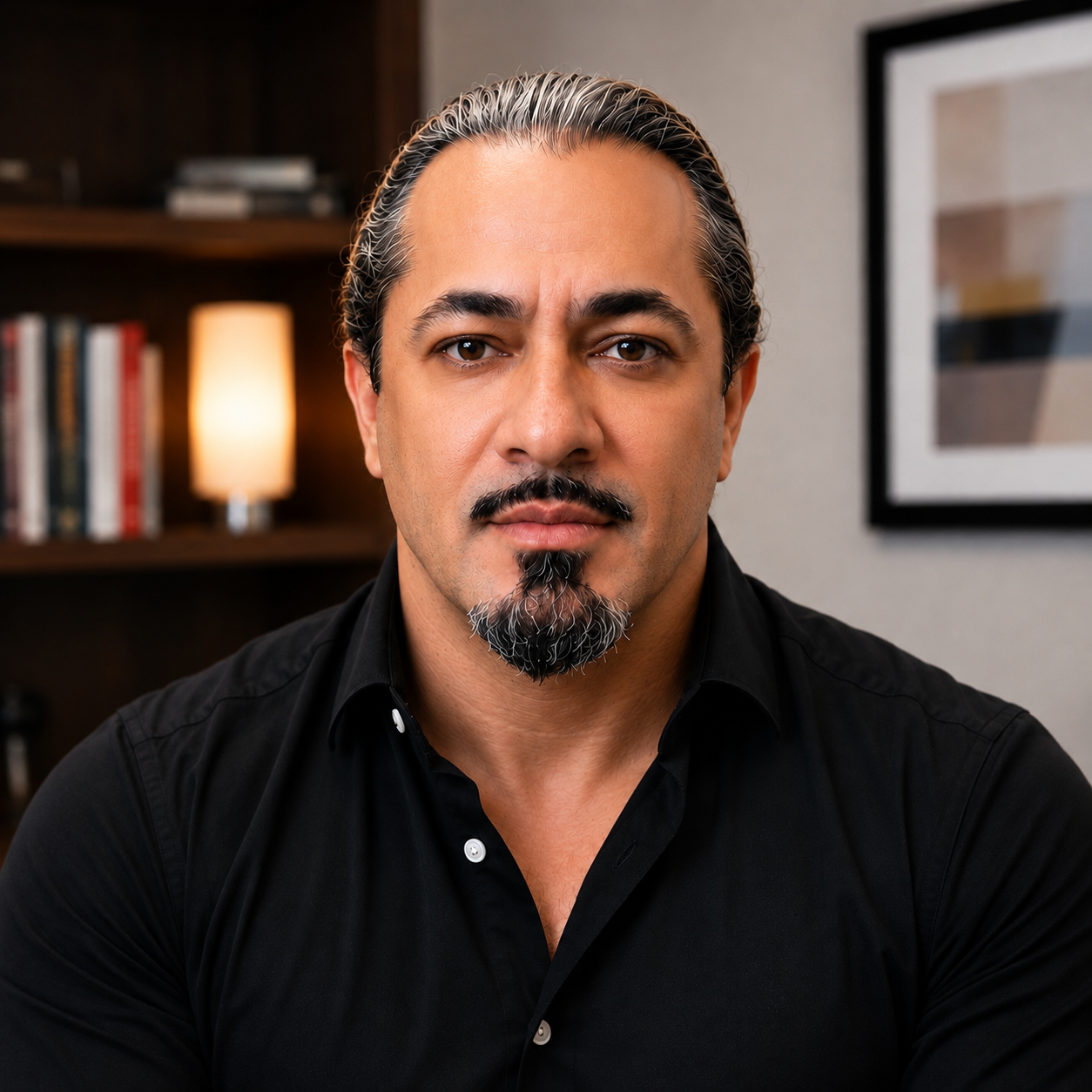
Samir Levin
Samir Levin is a biohacker and longevity researcher with 25 years of personal experimentation across peptides, hormonal optimization, and regenerative medicine. He is the founder of Keys to Health — a platform combining a 112-compound research encyclopedia, AI-powered bloodwork analyzer, peptide protocol builder, and evidence-based PDF protocols used by thousands of biohackers worldwide.
Samir's work is grounded in first-person experimentation, not theory. He personally reversed 10+ years of AAS-induced gynecomastia without surgery using an enzymatic stack he developed and documented. His protocols are built from clinical literature, N=1 data, and feedback from the Keys to Health community.
He covers peptides, TRT/HRT, GLP-1 agents, senolytics, longevity stacks, cognitive enhancement, and animal longevity protocols for dogs, cats, and horses.
BiohackingLongevityPeptidesHormone OptimizationBloodwork AnalysisBiological EngineeringPerformance Health