Peptides
BPC-157 Peptide: The Clinical Blueprint for Tissue Regeneration and Systemic Repair
By Samir Levin · August 27, 2026 · 17 min read
Disclaimer
This article is for informational and educational purposes only. It does not constitute medical advice, diagnosis, or treatment. Always consult a qualified healthcare provider before starting any new supplement, peptide, or protocol. Keys to Health and Samir Levin are not responsible for any actions taken based on this content.
Most users view the bpc-157 peptide as a simple patch for torn ligaments, but that perspective ignores the compound's true role as a systemic architect of biological repair. If you're struggling with stagnant recovery from connective tissue injuries or chronic gut inflammation, you've likely realized that standard protocols often fall short of the results you require. I've spent 25 years at the intersection of high-stakes performance and biological science, and I can tell you that the difference between mediocre results and elite-level regeneration lies in understanding the signaling pathways involved. This isn't just about localized healing; it's about mastering a molecule that modulates the VEGFR2 and Akt-eNOS axis to drive rapid angiogenesis and tissue remodeling.
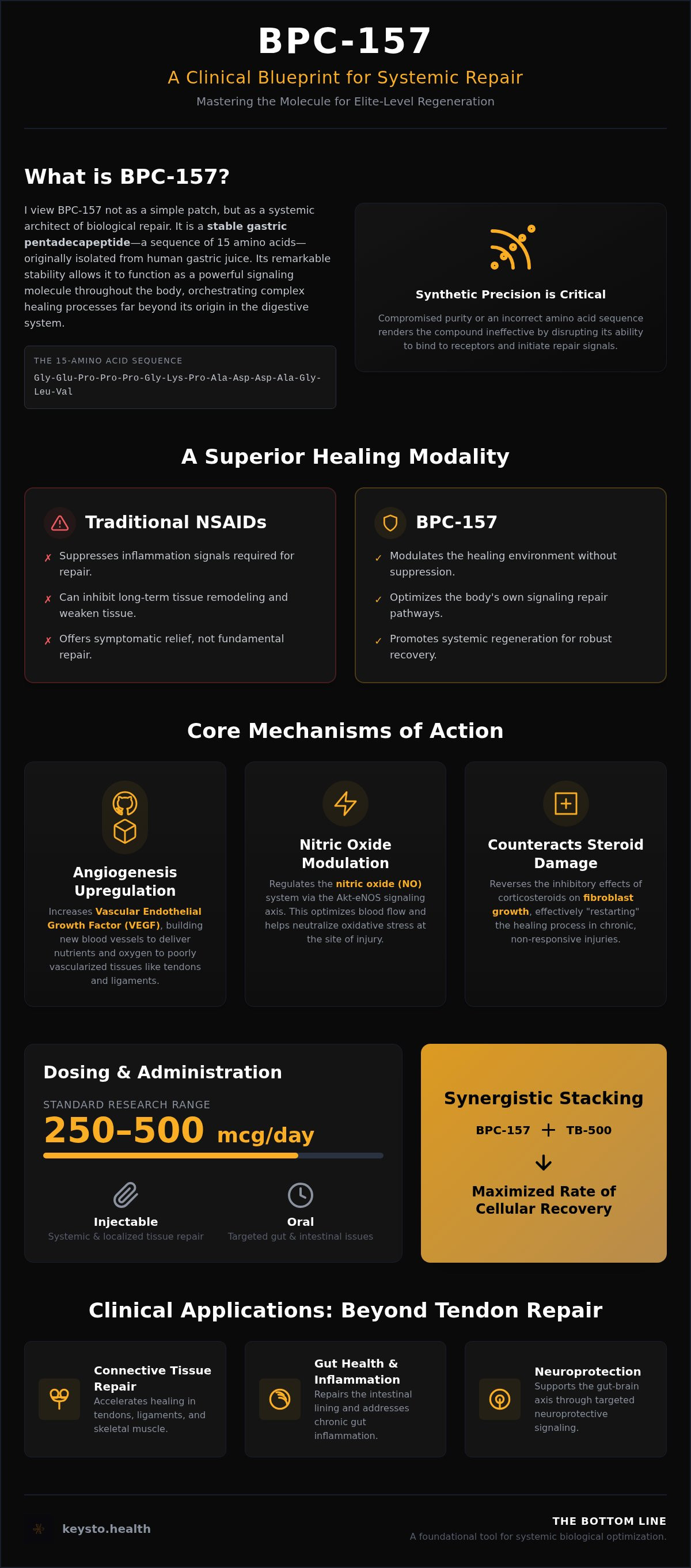
In this clinical blueprint, we'll move beyond the basics to master the biological mechanisms that make this gastric pentadecapeptide a cornerstone of regenerative medicine. I'll provide you with precise dosing protocols, typically ranging from 250 to 500 mcg per day, and clarify the persistent confusion surrounding oral versus injectable efficacy for systemic repair. We'll also examine synergistic stacking strategies, such as pairing BPC-157 with TB-500, to maximize the rate of cellular recovery. By the end of this guide, you'll have the exact data needed to utilize our Peptide Calculator and implement a professional-grade recovery strategy that delivers measurable outcomes.
Key Takeaways
- Understand why this pentadecapeptide derived from human gastric juice serves as a highly stable signaling molecule for systemic repair.
- Learn how to modulate the nitric oxide system and upregulate growth factors to trigger rapid angiogenesis and tissue remodeling.
- Establish precise administration protocols for the bpc-157 peptide, including a standard research range of 250–500 mcg/day, using our Peptide Calculator.
- Explore advanced applications for repairing the intestinal lining and supporting the gut-brain axis through targeted neuroprotective signaling.
- Integrate these protocols into a comprehensive Longevity Protocol to move beyond maintenance and into true biological optimization.
Table of Contents
- The Body Protection Compound: Why BPC-157 is the Baseline for Regenerative Protocols
- Mechanisms of Action: How BPC-157 Rewires the Healing Response
- Dosing Protocols and Administration: Precision over Guesswork
- Clinical Applications: Beyond Simple Tendon Repair
- Health Implementation: From Research to Optimization
The Body Protection Compound: Why BPC-157 is the Baseline for Regenerative Protocols
I view BPC-157 as the mandatory foundation for any serious Regenerative Protocol. Most athletes reach for NSAIDs when they feel a twinge in a joint, but those traditional anti-inflammatories often inhibit long-term tissue remodeling by blunting the initial inflammatory signaling required for repair. This pentadecapeptide acts as a master modulator of the healing environment instead of a suppressor. Researchers first identified it in the early 1990s while investigating protective factors in human gastric juice. While most peptides degrade almost instantly when exposed to digestive enzymes, this specific sequence shows remarkable stability. This BPC-157 overview confirms its history as a gastric-derived compound that we now use for full-body tissue repair.
From Gastric Juice to Systemic Healing
The evolution of the bpc-157 peptide from a stomach-lining protectant to a systemic repair agent is a result of its unique chemical resilience. Most research compounds are fragile and require complex delivery systems to survive metabolic breakdown. Scientists classify BPC-157 as a stable gastric pentadecapeptide because it maintains its structural integrity even in the presence of harsh gastric acid. This innate durability allows it to survive the digestive process and enter systemic circulation. Once it hits the bloodstream, it can signal for repair in distal tissues like tendons, ligaments, and skeletal muscle.
The 15-Amino Acid Sequence: Synthetic Precision
The biological power of this compound resides in its precise 15-amino acid sequence: Gly-Glu-Pro-Pro-Pro-Gly-Lys-Pro-Ala-Asp-Asp-Ala-Gly-Leu-Val. This specific arrangement is not accidental; it facilitates high-affinity receptor binding that triggers the angiogenesis pathways we'll discuss later. If even one amino acid is misaligned or if the purity is compromised by poor manufacturing, the signaling efficacy drops significantly. We maintain a detailed log of these requirements in our Compound Reference to ensure researchers prioritize synthetic precision over low-cost alternatives.
We don't use BPC-157 simply because it's popular in the biohacking community. We use it because it provides a biological blueprint for repair that doesn't rely on the presence of exogenous growth factors alone. By optimizing the body's own signaling pathways, it creates a permissive environment for recovery. This makes the bpc-157 peptide a baseline tool for anyone looking to bypass the slow healing cycles associated with connective tissue injuries.
Mechanisms of Action: How BPC-157 Rewires the Healing Response
BPC-157 functions as a systemic signaling molecule that modifies the expression of growth factors rather than merely providing amino acid substrate. It actively modulates the nitric oxide system via the Akt-eNOS axis to regulate blood flow and neutralize oxidative stress. This is particularly useful for individuals who have used corticosteroids, as the bpc-157 peptide can counteract the inhibitory effects these drugs have on tissue repair. By reversing the suppression of fibroblast activity caused by steroids, we can restart the healing process in chronic, non-responsive injuries.
VEGF Upregulation and Vascular Repair
Angiogenesis is the primary driver of recovery in poorly vascularized tissues like tendons and ligaments. The peptide upregulates Vascular Endothelial Growth Factor (VEGF) and its receptor, VEGFR2, which increases the density of blood vessels at the injury site. Sikiric et al. demonstrated this effect in various ischemic models, showing that the compound promotes collateralization. This is where the body effectively builds a vascular bypass around damaged vessels to deliver nutrients to the dead zone of an injury. While human data remains limited, with a 2025 systematic review identifying only one clinical study out of 544 screened papers, the consistency in animal models suggests a highly conserved biological mechanism.
Fibroblast Migration and Collagen Synthesis
Beyond blood flow, the peptide activates the FAK-paxillin pathway. This specific signaling cascade is essential for the mechanism of tendon healing because it controls how fibroblasts migrate to the site of damage and adhere to the extracellular matrix. Without this migration, the injury remains a void filled with fluid or weak scar tissue. By recruiting these cells, BPC-157 ensures the structural gap is closed with biological precision. I've observed that this process is what separates true regeneration from simple wound closing.
This recruitment leads to a critical transition from Type III collagen to Type I collagen. While Type III is necessary for immediate plugging of a wound, it lacks the tensile strength of Type I. BPC-157 does not just create more tissue; it organizes the structural matrix for functional integrity. This level of biological re-engineering is why we've integrated these findings into our high-performance protocols for elite-level recovery. Ensuring the structural matrix is functional rather than just present is the key to preventing re-injury.
Dosing Protocols and Administration: Precision over Guesswork
Precision is the difference between a successful research outcome and a wasted cycle. I've found that the standard dosage for the bpc-157 peptide typically falls within the 250 to 500 mcg per day range. While animal models often use much higher concentrations, this range has become the baseline for human longevity practitioners seeking systemic repair. A 2025 Systematic Review of BPC-157 in Orthopaedic Sports Medicine highlights that while preclinical data is robust, human application requires careful calibration of the delivery route to match the injury profile. You don't need to inject directly into a joint to see results; subcutaneous administration provides a systemic effect that reaches distal tissues through the vascular pathways we discussed earlier.
Proper reconstitution is non-negotiable for maintaining peptide stability. You must use bacteriostatic water for any multi-dose vial to prevent microbial growth over the course of the protocol. I recommend this specific workflow to ensure accuracy:
- Sanitize the rubber stoppers of both the peptide vial and the bacteriostatic water.
- Use our Peptide Reconstitution Calculator to determine the exact volume of diluent required for your target concentration.
- Slowly trickle the water down the side of the glass vial to avoid denaturing the delicate peptide chain.
- Store the reconstituted solution in a controlled environment between 2 and 8 degrees Celsius.
Injectable vs. Oral Stable BPC-157 (Arg-BPC)
The choice between administration routes depends entirely on your primary objective. Traditional BPC-157 acetate is highly effective when injected, but it's less stable in the acidic environment of the stomach. If you're targeting chronic gut inflammation or intestinal repair, the arginine salt (Arg-BPC) version is superior due to its enhanced bioavailability and resistance to gastric degradation. While oral administration works wonders for the gut-brain axis, I still prioritize subcutaneous injections for distal tendon repair to ensure the highest possible systemic concentration reaches the site of injury.
The Synergy Stack: BPC-157 and TB-500
We rarely use the bpc-157 peptide in isolation for severe ligament tears or post-surgical recovery. The most effective strategy involves stacking it with TB-500, a synthetic version of Thymosin Beta-4. While BPC-157 drives angiogenesis and fibroblast recruitment, TB-500 focuses on actin sequestration, which allows cells to move more freely to the injury site. This combination creates a dual-action mechanism that accelerates the remodeling phase of healing. You can find the specific ratios and timing for this combination in our Regenerative Protocol, which outlines how to synchronize these compounds for maximum structural integrity.
Clinical Applications: Beyond Simple Tendon Repair
While most users fixate on orthopedic issues, the bpc-157 peptide offers profound systemic benefits that extend to the central nervous system and metabolic health. I've analyzed data showing its ability to modulate the dopaminergic and serotonergic systems, providing a neuroprotective shield against toxic insults. It acts as a stabilizer, preventing the over-stimulation or depletion of neurotransmitters. This isn't just theoretical; the peptide has shown the capacity to protect the liver from chronic damage often caused by heavy NSAID use or environmental toxins. In studies involving hepatic damage, the peptide showed a significant reduction in liver enzymes like AST and ALT, suggesting it preserves hepatocyte function under stress.
This systemic reach is why the compound is a staple in our community for addressing the gut-brain axis. By repairing the intestinal lining at a cellular level, BPC-157 addresses the root cause of systemic inflammation that often manifests as brain fog or poor physical performance. By stabilizing these systemic pathways, we move from simple localized patching to comprehensive biological fortification.
Gastric Protection and Intestinal Integrity
The peptide's efficacy in inflammatory bowel disease (IBD) models is well-documented in preclinical research. In rat models involving groups of 10 to 20 animals, BPC-157 consistently reduced lesion scores and improved mucosal integrity compared to controls. It works by repairing the tight junctions, which are the protein seals between cells, in the gut lining. This structural repair prevents undigested food particles and pathogens from entering the bloodstream and triggering an immune response. We integrate these mechanisms into our Metabolic Protocol to ensure gut health supports your performance goals.
Animal Recovery: Protocols for Canine and Equine Health
I've observed some of the most dramatic results of the bpc-157 peptide in the veterinary space, particularly with performance animals. For domestic pets, we use specific guidelines for canine joint recovery to restore mobility in aging dogs or those recovering from surgery. In the world of high-stakes racing, the peptide is a game-changer for treating "bowed tendons" in horses. These protocols require precise dose scaling based on mass and metabolic rate, which we detail in our equine performance protocols. This allows owners to apply the same elite-level science to their animals' recovery.
Health Implementation: From Research to Optimization
Using the bpc-157 peptide as a standalone fix for a chronic injury is a tactical error I see far too often. True biological optimization requires a comprehensive strategy where recovery compounds function within a broader Longevity Protocol. This ensures that the systemic signaling we're triggering doesn't hit a bottleneck due to nutritional deficiencies or hormonal imbalances. I recommend a cyclic approach, typically ranging from 4 to 12 weeks, followed by a mandatory assessment period to gauge tissue integrity and systemic response.
Before initiating any protocol, you must establish baseline data through the HRT Bloodwork Analyzer. This tool allows us to see the full picture of your internal environment, from hormone levels to inflammatory markers. We also face a significant sourcing problem in the current landscape. There is a vast difference between research grade compounds intended for laboratory use and high-purity sequences required for predictable biological outcomes. As of August 2026, the regulatory landscape is shifting following the FDA's recent committee recommendations, making verified sourcing more critical than ever.
Integrating BPC-157 into a Longevity Framework
The goal for high-performance individuals is to maintain high-intensity training schedules as they age without accumulating structural debt. We achieve this by pairing recovery peptides with hormone optimization to create a synergistic environment. The Optimization Window is the biological state where your rate of cellular recovery consistently exceeds the rate of training-induced wear and tear. By leveraging these synergies, we can extend your peak performance years well beyond traditional expectations.
Monitoring Progress with AI Tools
We use the AI Protocol Builder to customize your stack based on specific variables like injury severity and biological age. This eliminates the guesswork that plagues most DIY biohacking attempts. During the protocol, we track systemic inflammation markers, specifically C-Reactive Protein (CRP) and Sedimentation Rate, to confirm the peptide is effectively dampening the inflammatory cascade. If these markers don't trend downward within the first 21 days, we adjust the dosing or delivery route to overcome biological resistance.
Master Your Regenerative Architecture
Transitioning from passive healing to active biological engineering requires a fundamental shift in perspective. You've seen how the bpc-157 peptide functions as a systemic architect, modulating growth factors and vascular density to bypass traditional recovery timelines. By integrating these signaling pathways with precision dosing and synergistic stacking, we move beyond mere maintenance into true performance optimization. I've spent 25 years refining these blueprints to ensure that recovery never becomes the bottleneck for high-stakes performance.
Success in this field depends on data rather than intuition. Utilizing bloodwork analysis to monitor markers like C-Reactive Protein ensures that your protocol stays within the optimal window for repair. We provide the technical depth and clinical clarity required to navigate these complex biological systems with confidence. It's time to leverage our database of 112 research compound mechanisms to secure your long-term structural integrity.
Your biological potential is defined by your ability to recover. Take control of your architecture and start building a more resilient version of yourself today.
Frequently Asked Questions
Is BPC-157 safe for long-term use in humans?
Human clinical data regarding the long-term safety of the bpc-157 peptide is nearly nonexistent. A 2025 systematic review identified only one clinical study out of 544 screened papers, meaning we must treat it as an investigational compound. I typically recommend cycling the compound for 4 to 12 weeks followed by a mandatory washout period. This prevents potential receptor desensitization and allows us to assess the baseline healing rate without exogenous assistance.
How do I calculate the correct dose using a 5mg vial of BPC-157?
Dose calculation depends entirely on the volume of bacteriostatic water used for reconstitution. If you add 2 ml of water to a 5 mg vial, each 0.1 ml on an insulin syringe equals 250 mcg. Precision is critical to avoid protocol drift and wasted material. I always direct our community to the Peptide Reconstitution Calculator to eliminate manual errors and ensure your research stays within the targeted 250 to 500 mcg per day range.
What is the difference between BPC-157 acetate and BPC-157 arginine salt?
The primary difference lies in biological stability and the intended administration route. BPC-157 acetate is the standard research version used for subcutaneous injections, but it degrades quickly in gastric acid. The arginine salt version is engineered for superior stability in the stomach. This makes the arginine salt the preferred choice for oral protocols targeting intestinal repair, while acetate remains the gold standard for injectable systemic recovery and tendon repair.
Can BPC-157 be used for senior dogs with arthritis?
We frequently utilize this compound for canine mobility issues in senior animals. Aging dogs often suffer from chronic inflammation and connective tissue degradation that mirrors human arthritis. The peptide's ability to modulate nitric oxide and drive angiogenesis helps restore joint function and reduce pain. You should refer to our specific dog joint mobility protocol for precise mass-based dosing and administration guidelines tailored for senior animals.
Should I inject BPC-157 locally at the site of the injury?
Localized injection is not strictly necessary because the bpc-157 peptide exerts a systemic effect through the vascular system. Once the compound enters the bloodstream, it signals for repair at the site of injury regardless of the injection point. While some practitioners prefer injecting near the damage for peace of mind, subcutaneous administration in the abdominal fat is equally effective for distal tendon repair. Focus on consistent dosing rather than proximity to the injury site.
Can BPC-157 help with Leaky Gut Syndrome?
The compound is exceptionally effective for repairing the intestinal lining by reinforcing tight junctions between epithelial cells. This structural repair prevents the systemic inflammation associated with Leaky Gut Syndrome. In IBD animal models, the peptide consistently reduced mucosal damage and accelerated the healing of gastric ulcers. I integrate this into our broader Metabolic Protocol to ensure that gut integrity supports overall biological performance and nutrient absorption.
What happens if I skip a dose in my BPC-157 protocol?
Skipping a single dose will not invalidate your progress, but consistency is the driver of the angiogenesis pathways we are targeting. If you miss a dose, simply resume your protocol at the next scheduled time. Do not double the dose to compensate, as this can lead to unnecessary waste of the compound without increasing the rate of repair. Maintaining a steady serum concentration is the key to providing a continuous signal for tissue remodeling.
Is BPC-157 prohibited for professional athletes in 2026?
BPC-157 is strictly prohibited by the World Anti-Doping Agency (WADA) as of August 2026. It has been on the prohibited list since January 2022 under the S0 category for non-approved substances. This ban applies at all times, both in-competition and out-of-competition. Because it lacks FDA approval, athletes cannot obtain a Therapeutic Use Exemption. If you are a professional athlete, using the bpc-157 peptide will result in a doping violation and significant career sanctions.

Article by
Samir Levin
Samir Levin is a biohacker and longevity researcher with 25 years of personal experimentation across peptides, hormonal optimization, and regenerative medicine. He is the founder of Keys to Health — a platform combining a 112-compound research encyclopedia, AI-powered bloodwork analyzer, peptide protocol builder, and evidence-based PDF protocols used by thousands of biohackers worldwide.
Samir's work is grounded in first-person experimentation, not theory. He personally reversed 10+ years of AAS-induced gynecomastia without surgery using an enzymatic stack he developed and documented. His protocols are built from clinical literature, N=1 data, and feedback from the Keys to Health community.
He covers peptides, TRT/HRT, GLP-1 agents, senolytics, longevity stacks, cognitive enhancement, and animal longevity protocols for dogs, cats, and horses.
bpc-157peptidesbiohackingtissue repairregenerative medicinegut healthtb-500dosing protocols