Recovery
Beyond Glucosamine: The Science of Modern Canine Joint Recovery Protocols
By Samir Levin · September 7, 2026 · 16 min read
Disclaimer
This article is for informational and educational purposes only. It does not constitute medical advice, diagnosis, or treatment. Always consult a qualified healthcare provider before starting any new supplement, peptide, or protocol. Keys to Health and Samir Levin are not responsible for any actions taken based on this content.
Glucosamine is not a recovery strategy; it's a maintenance baseline that frequently fails to meet the metabolic demands of active canine tissue repair. Most owners find themselves trapped in a reactive cycle of rest and NSAIDs, watching senior or working dogs struggle with slow recovery timelines while worrying about the long term impact on renal and hepatic health. You're right to be skeptical of the standard "wait and see" approach that characterizes many conventional canine joint recovery protocols.
This article provides a technical breakdown of the mechanistic drivers behind connective tissue repair, moving past the marketing hype to examine how specific research compounds might accelerate biological outcomes. We'll analyze the roles of angiogenesis and collagen synthesis, providing a structured framework for integrating advanced compounds like BPC-157 and TB-500 into a comprehensive recovery plan. While these substances remain experimental and evidence for their efficacy often stems from animal models or rodent studies, understanding their potential role in modulating the inflammatory response is critical for any owner prioritizing performance and longevity. Our goal is to reduce downtime and move from passive maintenance to active biological optimization.
Key Takeaways
- Standard "rest and NSAID" models often prioritize acute pain management over the long-term structural integrity required by active or working dogs.
- Effective healing requires addressing biological bottlenecks, specifically angiogenesis and the metabolic transition between Type I and Type III collagen synthesis.
- BPC-157 and TB-500 have demonstrated potential in animal models for accelerating tendon repair and modulating cell migration, though they remain experimental in canine applications.
- Comprehensive canine joint recovery protocols integrate metabolic priming and systemic load reduction as the foundational layer before introducing targeted research compounds.
- Precision is mandatory in experimental settings; utilizing specialized tools for reconstitution and protocol building ensures accurate data collection during recovery research.
Table of Contents
The Deficit in Standard Veterinary Joint Recovery
Conventional veterinary care often operates on a reactive damage control basis. For owners of high performance or working breeds, the standard recommendation of strict rest and Non-Steroidal Anti-Inflammatory Drugs (NSAIDs) is fundamentally incomplete. This model prioritizes immediate comfort but fails to address the underlying metabolic requirements for tissue remodeling. While acute pain management is necessary, it creates a healing ceiling where the dog reaches a state of non-painful dysfunction rather than full structural restoration.
In senior dogs, this deficit is even more pronounced. Reduced regenerative capacity means that simply suppressing symptoms does nothing to reverse the degenerative cascade. Chronic inflammation doesn't just cause pain; it actively prevents meaningful tissue repair by maintaining an environment of high oxidative stress and catabolic signaling. Modern canine joint recovery protocols must shift focus from mere symptom suppression to optimizing the biological environment for repair.
The Problem with Long-Term NSAID Reliance
NSAIDs function by inhibiting cyclooxygenase (COX) enzymes, which effectively reduces prostaglandin production. This is useful for short term pain relief but problematic for long term recovery. Prostaglandins are critical signaling molecules in the early stages of connective tissue healing. By suppressing them indefinitely, we risk interfering with the natural inflammatory phase necessary to trigger remodeling.
Systemic risks remain a significant concern. Chronic use is linked to renal stress and gastrointestinal erosion in many breeds. Owners must distinguish between pharmacological intervention, which is a tool for acute crisis, and metabolic support, which is the driver of long term joint health. A foundational understanding of arthritis in dogs reveals that it's a progressive metabolic disease, not just a mechanical wear and tear issue.
Defining the Goal: Regeneration vs. Symptom Suppression
The objective for an active dog isn't just a lack of limping. It's the restoration of tensile strength in ligaments and the maintenance of chondrocyte health. Early intervention after joint trauma is vital. Waiting for visible lameness often means the window for optimal healing has already closed. Moving beyond suppression requires a strategy that supports the structural integrity of the joint.
Establishing a baseline for recovery in working breeds involves:
- Restoring full range of motion without compensatory movement patterns.
- Increasing collagen turnover rates through targeted nutrition and specific research compounds.
- Modulating the systemic inflammatory load rather than just blocking local pain signals.
True recovery is a structural achievement. Masking pain while the joint continues to degrade is a tactical failure in longevity management. We need to prioritize protocols that address the cellular drivers of repair rather than just the sensory experience of injury.
Mechanistic Drivers of Canine Connective Tissue Repair
Joint healing is primarily a metabolic challenge, not just a mechanical one. Connective tissues like ligaments and tendons are notoriously slow to heal because they lack the robust vascularization found in skeletal muscle. This makes angiogenesis, the formation of new blood vessels, the fundamental bottleneck in any canine joint recovery protocols. Without a functional vascular network, the delivery of oxygen and nutrients to the injury site is insufficient to support the high energy demands of tissue synthesis and waste removal.
Growth factors like IGF-1 and TGF-beta coordinate this complex healing cascade. These molecules act as chemical messengers that signal for cell proliferation and collagen deposition. While many owners investigate evidence-based joint supplements to support these pathways, the efficacy of these interventions depends on underlying vascular health. Nitric oxide pathways play a critical role here, as they influence both vasodilation and the activity of fibroblasts, the cells responsible for building new tissue. Optimizing these signaling pathways is essential for moving beyond simple pain management and toward actual structural repair.
Angiogenesis and the Extracellular Matrix
Healing "white zone" tissues, such as the inner meniscus or deep tendon fibers, is difficult because they are naturally avascular. Recovery requires stimulating endothelial cell migration to build a temporary vascular bridge into these zones. The extracellular matrix (ECM) acts as the biological scaffold for this growth. If the ECM is degraded or lacks structural integrity, new cells cannot anchor properly. This often results in a stalled repair process or the formation of disorganized scar tissue that is prone to re-injury. Maintaining the ECM through metabolic support is a prerequisite for functional regeneration.
The Inflammatory Phases of Healing
Connective tissue repair follows a structured, three-phase trajectory. Mismanaging any stage can compromise the final outcome. For those looking to optimize these biological pathways, reviewing specific regenerative protocols can provide a structured approach to supporting these cellular mechanisms.
- Phase 1: Controlled Inflammation. This initial phase clears cellular debris and triggers the repair cascade. Aggressive suppression of this phase with NSAIDs can delay the transition to actual healing by inhibiting necessary signaling molecules.
- Phase 2: Proliferation. The body rapidly synthesizes Type III collagen. This is a temporary, "immature" tissue that provides quick stability but lacks the tensile strength required for high performance activity.
- Phase 3: Remodeling. The body replaces Type III collagen with organized, high-strength Type I collagen. This stage is the longest and most overlooked, often requiring months of controlled loading to ensure the tissue can withstand athletic stress.
Peptides in Canine Models: Evaluating BPC-157 and TB-500
Transitioning from the metabolic bottlenecks of angiogenesis and collagen synthesis, modern canine joint recovery protocols are increasingly exploring the use of synthetic peptides. These compounds aren't supplements in the traditional sense. They're signaling molecules that could theoretically modulate the repair environment. While they aren't FDA-approved animal drugs, recent regulatory shifts, including the July 2026 recommendation by the FDA's Pharmacy Compounding Advisory Committee to add BPC-157 and TB-500 to the 503A Bulks List, suggest a growing interest in their therapeutic potential within a controlled research framework.
BPC-157: The Pentadecapeptide for Connective Tissue
BPC-157 is a partial sequence of a protein found in gastric juice. Evidence suggests BPC-157 accelerates the healing of the Achilles tendon in rodents by upregulating growth factor receptors and promoting fibroblast migration. In animal models, it appears to facilitate early vascularization in tissues that are naturally avascular. Anecdotal data in canine recovery circles suggests potential utility for cranial cruciate ligament (CCL) tears, though human evidence remains unestablished. Research into this compound requires extreme precision in dosing. Utilizing a Peptide Reconstitution Calculator is a prerequisite for maintaining accurate concentrations in any research setting.
TB-500 and the Upregulation of Actin
TB-500 is a synthetic version of the naturally occurring peptide Thymosin Beta-4. Its primary mechanism involves actin sequestration, a process critical for cell migration and tissue organization. Animal research indicates that TB-500 appears to promote angiogenesis in damaged tissues, potentially reducing the formation of disorganized scar tissue. For owners of high-performance dogs, the goal is functional repair, not just a biological patch. It's mechanistically plausible that TB-500 drives the migration of repair cells to the injury site more aggressively than standard protocols allow.
In biohacking circles, these compounds are often used synergistically. While BPC-157 focuses on the structural integrity of the tendon-to-bone interface, TB-500 appears to support systemic cell migration and vascular growth. Both peptides are prohibited under the 2026 WADA Prohibited List for human athletes, reflecting their potent biological activity. For those exploring these experimental pathways, the Compound Encyclopedia provides a technical breakdown of 112 research compounds currently under investigation. Understanding the distinction between systemic administration and localized effects is vital for any structured research into canine performance and longevity.
Structuring a Multimodal Recovery Framework
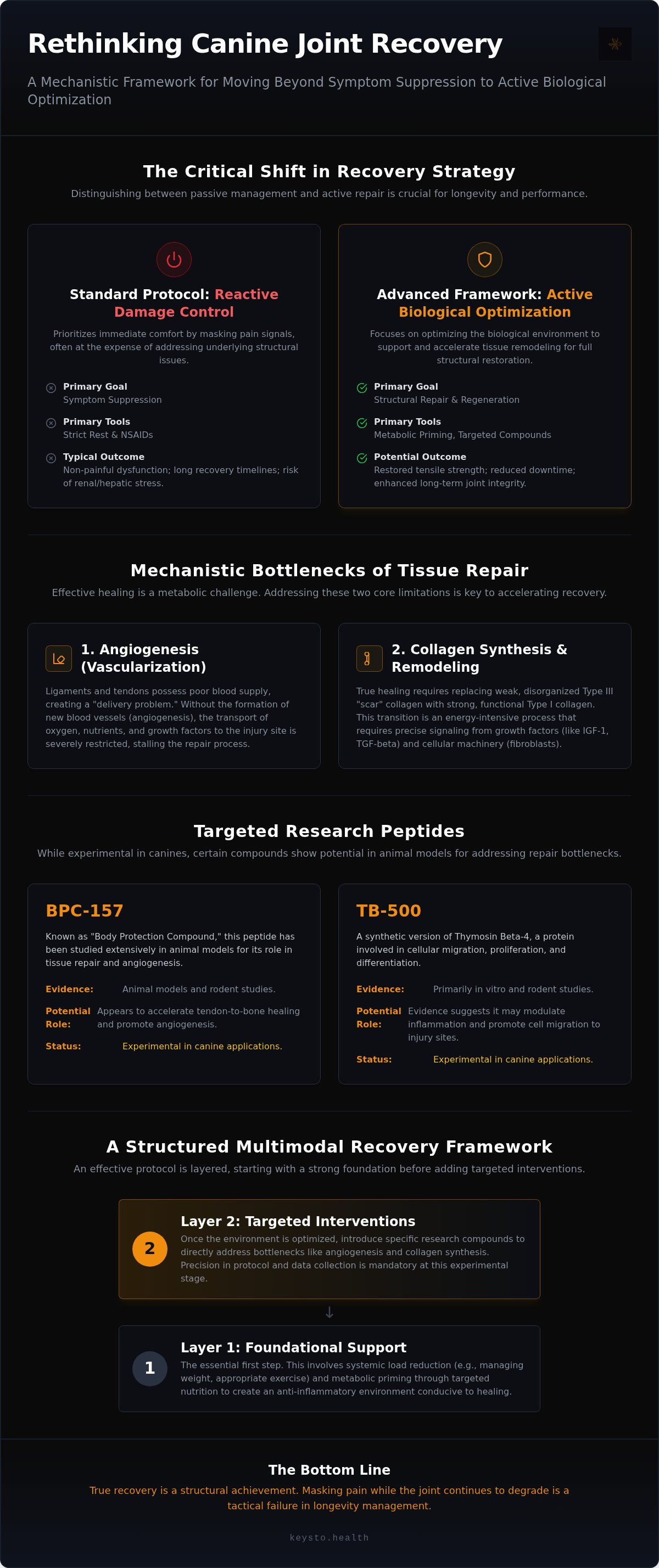
Effective canine joint recovery protocols aren't static lists of supplements. They're dynamic, phase-based frameworks that synchronize metabolic support with mechanical loading. A multimodal approach ensures that every biological bottleneck—from nutrient delivery to tissue remodeling—is addressed systematically. This framework moves beyond the "rest and wait" mentality, instead focusing on active biological optimization.
The sequence of implementation is critical for success:
- Step 1: Metabolic Priming. Reduce the systemic inflammatory load before introducing regenerative compounds. A pro-inflammatory environment can blunt the signaling efficacy of peptides.
- Step 2: Targeted Integration. Select compounds based on the specific tissue type. For example, BPC-157 is often prioritized for tendon-to-bone interfaces, while TB-500 may be more appropriate for systemic vascular support.
- Step 3: Progressive Loading. Transition from strict rest to controlled stress. Controlled loading is the primary stimulus for collagen fibers to align along lines of tension.
- Step 4: Monitoring. Use mobility assessments and, where possible, inflammatory biomarkers to adjust the protocol based on real-time data.
Nutritional Co-factors for Joint Synthesis
Regeneration requires a surplus of specific micronutrients. Vitamin C and Copper are essential co-factors for lysyl oxidase, the enzyme responsible for collagen cross-linking. Without these, newly synthesized tissue remains structurally weak and prone to re-injury. Omega-3 fatty acids, specifically EPA and DHA, play a non-negotiable role in modulating the inflammatory response by competing with pro-inflammatory arachidonic acid. This is why integrated metabolic protocols are the prerequisite for any advanced recovery strategy.
Load Management and Physical Therapy
Prolonged immobilization is a legacy tactic that frequently results in arthrofibrosis and significant muscle atrophy. Modern protocols favor early, controlled mobilization. Hydrotherapy is an elite tool in this stage, utilizing buoyancy to allow for joint movement without the stress of full weight-bearing. This maintains synovial fluid circulation and prevents joint capsule stiffening. As the dog progresses, proprioceptive training—using unstable surfaces or balance boards—re-establishes the neuromuscular pathways necessary to prevent compensatory injuries. The goal isn't just to heal the joint but to restore the entire kinetic chain's performance.
Utilizing Advanced Research Tools for Animal Health
Executing sophisticated canine joint recovery protocols requires more than theoretical knowledge. It demands clinical precision in application. Owners transitioning from reactive care to research-based optimization must adopt a data-driven mindset. Meticulous record-keeping is the only way to distinguish between meaningful structural progress and anecdotal noise. Tracking gait quality, localized inflammation, and dosage response allows for the methodical refinement of a protocol over time. This structured approach ensures that interventions are based on measurable outcomes rather than guesswork.
Precision in Research Dosing
Lyophilized peptides are inherently fragile biological compounds. Common mixing errors, such as aggressive agitation or incorrect diluent ratios, can degrade these sensitive molecules before they're ever administered. Accurate research necessitates calculating mcg/kg ratios to ensure consistency across different animal subjects. Utilizing the Peptide Reconstitution Calculator is a prerequisite for maintaining these precise concentrations. This level of accuracy is mandatory when dealing with substances whose primary evidence base currently exists in animal models and rodents. Maintaining the stability and potency of these compounds through controlled storage and handling is a non-negotiable component of the research process.
The Future of Canine Longevity Science
The boundary between human biohacking and veterinary science is rapidly dissolving. We're observing a significant shift toward proactive biological management, where the objective is extending the "healthspan" of the animal rather than just managing the symptoms of decay. This involves applying rigorous principles of optimization—such as modulating cellular signaling pathways and enhancing the rate of structural repair—to the canine model. It's a move from maintenance to architecture.
Technical education is the primary driver of this evolution. The Compound Encyclopedia serves as an authoritative resource for owners seeking to understand the mechanistic drivers behind 112 different research compounds. Navigating these tools allows for a sophisticated approach to animal health that mirrors the protocols used in high-stakes human performance. Proactive joint management isn't defined by a single intervention. It's a comprehensive, data-informed strategy that prioritizes the long-term structural integrity and performance capacity of the dog.
Architecting the Future of Canine Performance
Shifting from passive rest to active biological optimization is the only way to break the healing ceiling in performance dogs. Modern canine joint recovery protocols must prioritize the metabolic drivers of angiogenesis and collagen synthesis rather than simply masking symptoms with NSAIDs. This transition requires a move from generic maintenance to the precise architecture of tissue repair.
Leveraging experimental compounds like BPC-157 and TB-500 requires a rigorous, data-driven approach supported by science-backed health strategies for dogs, cats, and horses. By utilizing expert-led guides from Samir Levin, you can move toward a more sophisticated model of animal longevity that values structural integrity over symptom suppression.
Accessing specialized tools like the AI Peptide Protocol Builder ensures that your research remains precise and results-oriented. It's time to implement a recovery framework that prioritizes long-term biological capital and performance longevity.
Frequently Asked Questions
Is BPC-157 safe for dogs with joint injuries?
Safety has not been established through large scale clinical trials in dogs. Evidence in rodents and other animal models suggests high tolerability; however, BPC-157 remains an experimental compound. While the FDA's Pharmacy Compounding Advisory Committee recommended its inclusion on the 503A Bulks List in July 2026, it is not an approved animal drug. Use in research settings requires strict adherence to precise dosing and careful monitoring of systemic responses.
What is the difference between TB-500 and BPC-157 for canine recovery?
The primary difference lies in their mechanistic targets. BPC-157 is a pentadecapeptide that appears to upregulate growth factor receptors at the tendon-to-bone interface in rodent studies. TB-500, a synthetic version of Thymosin Beta-4, focuses on actin sequestration and promoting cell migration for angiogenesis. Many advanced canine joint recovery protocols stack these compounds to address both structural integrity and vascular delivery simultaneously during the proliferative phase of healing.
How much does it cost to implement an advanced canine joint protocol?
Costs for advanced recovery strategies vary significantly based on the specific research compounds selected and the level of diagnostic monitoring required. Unlike standard retail supplements, these protocols involve professional grade tools and precise compounding. Owners should prioritize sourcing through reputable channels that provide third party analytical testing. While the initial investment exceeds basic maintenance, the objective is to reduce long term costs associated with chronic degeneration and repeated acute crises.
Can I use human-grade peptides for my dog's recovery?
Most research compounds are sold as research chemicals without a formal distinction between human and veterinary grades. The critical factor is not the label but the purity and concentration verified by a Certificate of Analysis (COA). Owners must ensure that any compound used in a research setting is free from contaminants and accurately dosed. Utilizing a Peptide Reconstitution Calculator is essential for converting these compounds into precise concentrations for animal subjects.
What are the first signs that a canine joint protocol is working?
Success is measured by objective mobility changes rather than just a reduction in visible pain. The first signs often include reduced compensatory movement patterns and increased weight bearing on the affected limb during low impact activity. Improved fluidness in the gait during hydrotherapy or controlled walks suggests that the inflammatory environment is stabilizing. Consistent monitoring of these biomarkers allows for the methodical adjustment of canine joint recovery protocols based on real time data.
How long should a typical peptide cycle last for a dog?
Cycle length depends on the severity of the injury and the specific remodeling phase of the tissue. Anecdotally in biohacking circles, research cycles often range from 4 to 8 weeks followed by a mandatory washout period to prevent receptor desensitization. Connective tissue repair is a slow metabolic process; stopping too early can stall the transition from immature Type III collagen to high strength Type I collagen. Monitoring progress through mobility assessments determines the necessary duration.
Are there any side effects of using Thymosin Beta-4 in dogs?
Data regarding side effects in canines is limited. In animal models, Thymosin Beta-4 is generally well tolerated, though theoretical risks exist due to its potent pro-angiogenic nature. Because it promotes blood vessel growth, it could theoretically support the proliferation of pre-existing underlying conditions. Owners should ensure a baseline of health is established through bloodwork before initiating research. Any experimental protocol carries inherent risks that must be balanced against the potential for accelerated structural repair.
What happens if I stop the recovery protocol too early?
Stopping a protocol prematurely often results in incomplete remodeling of the injured tissue. Healing follows a strict three phase trajectory: inflammation, proliferation, and remodeling. If support is withdrawn during the proliferative phase, the body may only produce disorganized scar tissue or immature collagen. This leaves the joint structurally vulnerable to re-injury once the dog returns to high performance activity. Completion of the full remodeling phase is vital for restoring tensile strength and long term joint stability.

Article by
Samir Levin
Samir Levin is a biohacker and longevity researcher with 25 years of personal experimentation across peptides, hormonal optimization, and regenerative medicine. He is the founder of Keys to Health — a platform combining a 112-compound research encyclopedia, AI-powered bloodwork analyzer, peptide protocol builder, and evidence-based PDF protocols used by thousands of biohackers worldwide.
Samir's work is grounded in first-person experimentation, not theory. He personally reversed 10+ years of AAS-induced gynecomastia without surgery using an enzymatic stack he developed and documented. His protocols are built from clinical literature, N=1 data, and feedback from the Keys to Health community.
He covers peptides, TRT/HRT, GLP-1 agents, senolytics, longevity stacks, cognitive enhancement, and animal longevity protocols for dogs, cats, and horses.
canine healthdog joint supportjoint recoveryBPC-157TB-500peptidesworking dogscanine performance