Longevity
Advanced Anti-Aging Compound Research: The 2026 Clinical Hierarchy
By Samir Levin · August 30, 2026 · 16 min read
Disclaimer
This article is for informational and educational purposes only. It does not constitute medical advice, diagnosis, or treatment. Always consult a qualified healthcare provider before starting any new supplement, peptide, or protocol. Keys to Health and Samir Levin are not responsible for any actions taken based on this content.
Most longevity advice is a collection of expensive placebos and influencer-driven noise that ignores the hard data of 2026. You're likely exhausted by the conflicting protocols and unvalidated supplements flooding your feed. I've spent 25 years filtering the signal from the noise. The reality is that anti-aging compound research has finally moved past speculation into a clinical hierarchy of absolute certainty.
In this guide, we'll bypass the marketing fluff to master the clinical mechanisms and research-backed protocols for the most potent compounds currently validated. You'll gain a clear framework for the 2026 Clinical Hierarchy, including actionable dosing ranges and stacking strategies. We'll examine why the PEARL trial results changed our approach to rapamycin and how the 2026 FDA reclassification of peptides like BPC-157 and MOTS-c impacts your optimization strategy. By the end, you'll have a data-driven blueprint for measuring biological age and refining your personal longevity stack with surgical precision.
Key Takeaways
- Categorize geroprotectors into a clinical hierarchy that separates the "Big Three" compounds from secondary metabolic and mitochondrial optimizers.
- Master the latest anti-aging compound research to modulate core pathways like mTOR and cellular senescence with pharmacological precision.
- Implement synergistic protocols, such as pairing BPC-157 with TB-500, using our Peptide Calculator to ensure precise dosing and reconstitution.
- Transition from anecdotal guesswork to a data-driven strategy by integrating biological age markers with our HRT Bloodwork Analyzer.
- Establish actionable dosing ranges and cycling schedules based on the most recent 2026 clinical data and human trials.
Table of Contents
- The 2026 Longevity Landscape: Beyond the Supplement Hype
- Core Pathways of Aging: mTOR, Senescence, and NAD+ Kinetics
- The 2026 Compound Hierarchy: Ranking Validated Geroprotectors
- Implementation Framework: Precision Dosing and Synergistic Stacking
- Data-Driven Optimization: The Feedback Loop for Longevity
The 2026 Longevity Landscape: Beyond the Supplement Hype
I've spent 25 years in the trenches of high-stakes performance and biological science. I've watched countless "miracle" supplements vanish into the graveyard of failed promises. True anti-aging compound research isn't about chasing the latest viral extract promoted by longevity influencers. It's the rigorous study of geroprotectors, pharmacological agents specifically designed to delay biological decline by targeting the fundamental drivers of senescence.
The paradigm has shifted from simply extending lifespan to maximizing healthspan. We don't just want more years; we want years lived without chronic disease and functional decay. This requires a transition from generic wellness to evidence-based interventions. While influencers rely on anecdotes, we rely on the clinical hierarchy of validated compounds that produce measurable results in both human and animal models.
The NIH Interventions Testing Program (ITP) Standard
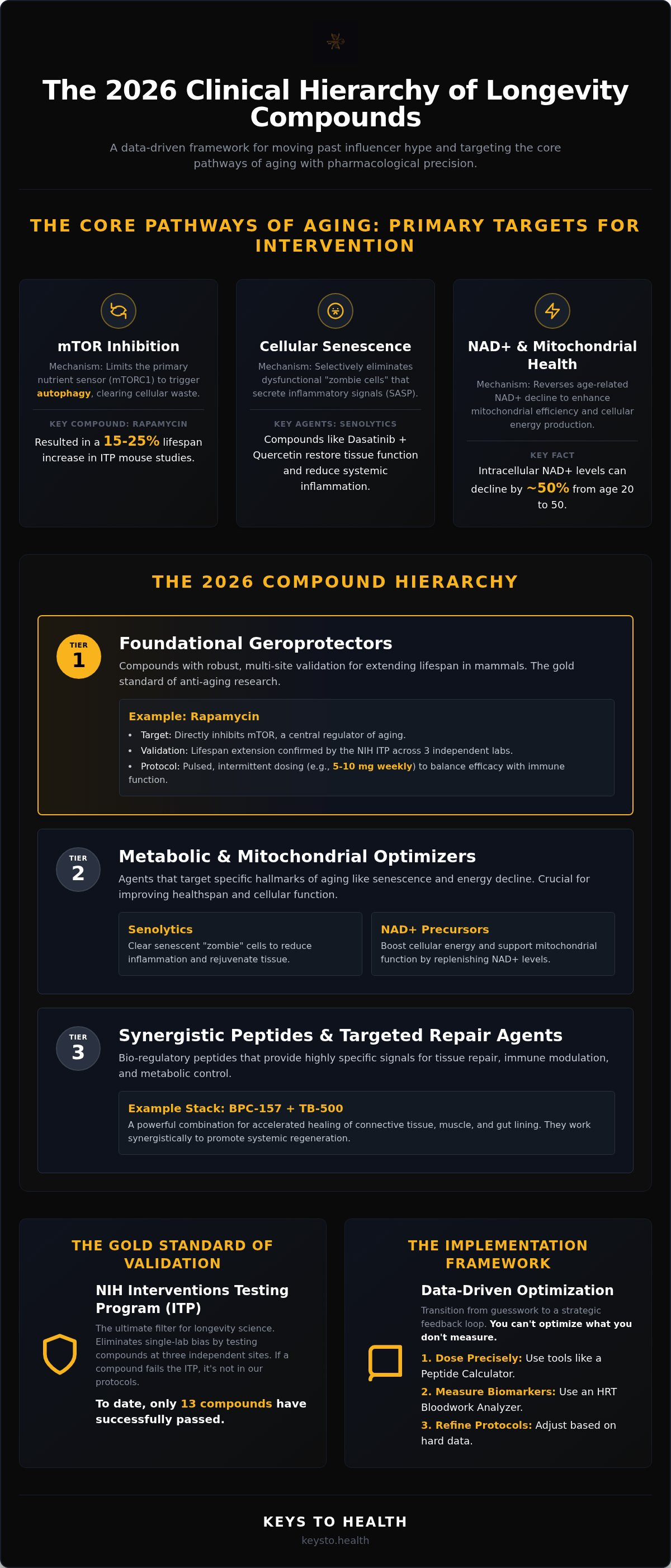
The NIH Interventions Testing Program (ITP) is the ultimate filter for longevity science. It eliminates the "single-lab bias" by testing compounds simultaneously at three independent sites: The Jackson Laboratory, University of Michigan, and UT Health San Antonio. This rigorous methodology is the gold standard for validating whether a substance actually works across genetically diverse populations. To date, only 13 compounds have successfully extended lifespan in ITP trials.
ITP data provides a level of certainty that small-scale mouse studies can't match. If a compound fails the ITP, it doesn't make it into our protocols. We focus on the substances that survive this gauntlet, ensuring that your biological investment is backed by multi-site validation rather than marketing hype. This data forms the bedrock of our 2026 clinical hierarchy.
Mechanism-First Biohacking: The Architect's Perspective
We prioritize compounds based on their ability to modulate the core biological processes of aging. This is mechanism-first biohacking. Instead of flooding the system with generic antioxidants, we target specific nutrient-sensing pathways and cellular repair mechanisms. This approach treats your biology as an architectural project that requires precise blueprints and constant monitoring.
You can't optimize what you don't measure. I use the AI Bloodwork Analyzer to establish a data-driven feedback loop. This tool allows us to see exactly how these compounds affect your unique biomarkers. It's the difference between guessing and strategic optimization. Our biological optimization blueprints are built on this data, moving you from a passive observer to the architect of your own longevity.
Core Pathways of Aging: mTOR, Senescence, and NAD+ Kinetics
Aging isn't a single event but a failure of interconnected biological systems. Effective anti-aging compound research focuses on four primary targets: mTOR, cellular senescence, NAD+ kinetics, and the AMPK pathway. If you don't modulate these pathways, you're just polishing the brass on a sinking ship. We focus on specific mechanisms that drive systemic decline rather than masking symptoms.
MTOR Inhibition: The Rapamycin Mechanism
The mammalian target of rapamycin (mTOR) acts as the body's primary nutrient sensor. Rapamycin inhibits the mTORC1 complex, which triggers autophagy and reduces the accumulation of misfolded proteins. A 2025 comprehensive review confirmed that Rapamycin administration resulted in a 15-25% increase in lifespan in heterogeneous mice across multiple testing sites. While the animal data is robust, human application requires intermittent dosing schedules to avoid chronic immunosuppression and maintain metabolic flexibility. We typically see protocols utilizing 5–10 mg once weekly to balance mTOR inhibition with immune function.
Senolytics: Clearing the Biological Debris
As we age, cells enter a state of senescence where they stop dividing but refuse to die. These "zombie cells" secrete a pro-inflammatory cocktail known as the Senescence-Associated Secretory Phenotype (SASP), which damages neighboring healthy tissue. Senolytic agents like Dasatinib, Quercetin, and Fisetin selectively induce apoptosis in these cells to restore vascular health and reduce systemic inflammation. For specific implementation, I use the Senolytic Protocol to time these interventions for maximum clearance without disrupting healthy cellular turnover.
NAD+ Precursors and Mitochondrial Efficiency
Intracellular NAD+ levels decline by roughly 50% every 20 years, starving the sirtuins (SIRT1-7) required for DNA repair and genomic stability. Precursors like Nicotinamide Mononucleotide (NMN) and Nicotinamide Riboside (NR) bypass traditional rate-limiting steps to restore mitochondrial efficiency. A 2024 double-blind human trial demonstrated that 900mg of daily NMN supplementation significantly improved intracellular NAD+ levels and increased 6-minute walk test performance by 18% in healthy adults. This restoration is foundational to NIH cellular rejuvenation research aimed at reversing biological age at the transcriptomic level.
Synergy exists between these pathways; for example, activating the AMPK longevity pathway improves insulin sensitivity, which further downregulates overactive mTOR signaling. Most practitioners fail because they treat these pathways in isolation. We find better results by layering these interventions into cohesive optimization protocols that target multiple hallmarks of aging simultaneously.
The 2026 Compound Hierarchy: Ranking Validated Geroprotectors
I don't play games with unproven molecules. My 2026 hierarchy ranks geroprotectors based on the density of clinical evidence and the safety-to-reward ratio. We categorize these substances into three distinct tiers to guide strategic implementation. This structure ensures you're investing in compounds with the highest probability of success rather than chasing marketing trends.
- Tier 1: The Gold Standard. Rapamycin, Acarbose, and 17α-estradiol. These possess the most robust cross-species evidence, validated primarily through the NIH Interventions Testing Program.
- Tier 2: Metabolic and Mitochondrial Optimizers. Metformin, NAD+ precursors, and Urolithin A. These focus on maintaining cellular energy, glucose homeostasis, and mitophagy.
- Tier 3: Emerging Peptides and Bioregulators. Epitalon, GHK-Cu, and FoxO4-DRI. These are high-potential research agents with a growing body of human data and specific regenerative targets.
Acarbose and 17α-Estradiol: The ITP Winners
Acarbose is often overlooked by biohackers seeking flashy results, but its performance in anti-aging compound research is undeniable. Its mechanism involves inhibiting alpha-glucosidase in the small intestine to blunt postprandial glucose spikes. This reduction in glucose variability significantly lowers oxidative stress and systemic glycation. ITP outcomes demonstrated a lifespan extension of up to 19% in male mice, making it one of the most effective interventions ever recorded.
Similarly, 17α-estradiol has emerged as a powerhouse for male longevity. Unlike its counterpart 17β-estradiol, it's a non-feminizing estrogen that doesn't trigger secondary female sex characteristics. It works by improving metabolic health and reducing age-related neuroinflammation. Clinical reviews of ITP data confirm its efficacy in male subjects, though the benefits appear significantly less pronounced in females.
Peptides for Regenerative Longevity
Peptides represent the frontier of biological optimization. Epitalon, a synthetic version of the pineal peptide epithalamin, works through telomerase activation and pineal gland regulation. It restores melatonin rhythms and has shown potential in long-term human trials for reducing all-cause mortality. We've seen it used effectively in protocols to reset circadian biology and maintain genomic stability.
GHK-Cu is another essential agent in this tier. It facilitates genomic remodeling, effectively shifting the expression of over 3,000 genes to a younger state. Its role in vascular health biohacking and tissue repair is well-documented. For full mechanism data and clinical context on these and 110 other agents, refer to our Compound Encyclopedia. We use these Tier 3 agents to fill the gaps that metabolic optimizers alone cannot address.
Implementation Framework: Precision Dosing and Synergistic Stacking
Longevity is a game of precision, not volume. Most practitioners fail because they treat compounds in isolation. My approach demands a conservative start followed by frequent measurement and strategic cycling. In the world of anti-aging compound research, more is rarely better. Longevity doses are typically 50% lower than those used for acute injury repair. Overloading receptors leads to desensitization and metabolic friction.
Precision reconstitution is non-negotiable. Use the Peptide Reconstitution Calculator to ensure your math is flawless. A decimal point error in this field is a biological failure that can set your progress back months.
The Regenerative Stack: BPC-157 + TB-500
Pairing these two agents creates a superior regenerative environment that a single compound cannot achieve. BPC-157 peptide upregulates VEGFR2 expression to stimulate angiogenesis and soft tissue healing. TB-500 complements this by promoting actin sequestration, which facilitates the migration of cells to damaged sites. I recommend a maintenance dose of 250–500 mcg of BPC-157 daily combined with 2–5 mg of TB-500 twice weekly. This stack is essential for maintaining vascular integrity and systemic repair capacity as you age.
Metabolic Optimization Stacks
We've previously discussed Rapamycin, but its potential to induce mild insulin resistance in some users requires a counter-strategy. We stack Rapamycin with Metformin or Berberine to maintain glucose homeostasis. GLP-1 agonists have also transitioned from weight loss tools to longevity essentials. Beyond glucose control, they offer neuroprotection and reduce systemic anti-inflammation. You can find advanced metabolic management strategies in our GLP-1 Guide.
Animal Longevity: Translating the Research
We apply the latest anti-aging compound research and ITP findings to our senior pets using strict metabolic scaling. Rapamycin and BPC-157 are highly effective in canine and feline models for preserving joint health and cognitive function. We adapt human research compounds for safe animal use by adjusting for species-specific clearance rates. Our Canine Longevity Protocol provides the clinical framework for extending your dog's healthspan using these validated agents.
Data-Driven Optimization: The Feedback Loop for Longevity
Guessing with your biology is a recipe for failure. I've seen enthusiasts stack dozens of compounds without a single baseline lab, essentially flying blind in a storm. An Elite Performance Architect uses bloodwork as their primary blueprint. Anti-aging compound research provides the pharmacological levers, but your data determines when and how to pull them. A true feedback loop requires testing every 90 to 120 days to observe how your system responds to specific interventions.
We track specific markers to validate our interventions and prevent metabolic friction. High-sensitivity C-reactive protein (hs-CRP) monitors systemic inflammation; if it's above 1.0 mg/L, your regenerative capacity is compromised regardless of your stack. Hemoglobin A1c (HbA1c) tracks long-term glucose stability, where we aim for a target below 5.2% to minimize glycation and oxidative stress. Cystatin C provides a precise renal function assessment, which is vital when utilizing high-performance research compounds that can impact kidney load. Integrating these results with the Longevity Protocol ensures every molecule serves a measurable purpose.
Measuring Biological Age
Epigenetic clocks, such as the Horvath or GrimAge tests, measure DNA methylation patterns to quantify the efficacy of your current stack. These tools tell us if your anti-aging compound research application is actually slowing your rate of decay or just providing an expensive placebo effect. I use the AI Bloodwork Analyzer to identify hidden performance gaps that specific compounds can bridge before they manifest as clinical symptoms. Biological age reflects the functional integrity of your cellular processes as measured by multi-omic biomarkers like albumin and alkaline phosphatase, while chronological age is simply a record of time passed.
Bottom Line: Your Longevity Strategy
Pharmacology is a tool, not a panacea. It won't save you from poor sleep or a broken metabolism, but it'll amplify a solid foundation once those basics are locked in. The future of healthspan is personalized, AI-driven, and strictly protocol-based. We're moving away from generic health advice toward a reality where your specific genetic and phenotypic data dictates your pharmacological roadmap. Stop following influencers and start following your data.
Build your custom strategy with the AI Peptide Protocol Builder
Master Your Biological Architecture
The 2026 landscape demands a transition from reactive maintenance to proactive biological engineering. We've established that the most effective strategy relies on a clinical hierarchy, prioritizing ITP-validated agents like Rapamycin and Acarbose over unverified supplements. By leveraging synergistic stacks and precise dosing, you move beyond the noise of influencers into the realm of true performance optimization.
Success in anti-aging compound research is ultimately defined by your ability to close the loop between pharmacology and personal data. You now have the framework to rank compounds, calculate precise reconstitutions, and monitor your biomarkers with clinical accuracy. This is not a static process; it's a continuous refinement of your biological blueprint using indexed data on over 112 compounds and their specific mechanisms of action.
Biological decline is no longer an inevitability you must accept. With the right protocols and a commitment to data-driven feedback, you can maintain peak functional integrity for decades. Start building your blueprint today.
Frequently Asked Questions
Is Rapamycin safe for humans to use for longevity?
Rapamycin is safe when utilized under specific intermittent protocols designed to avoid chronic immunosuppression. The 2025 PEARL clinical trial demonstrated that weekly doses of 10 mg increased lean mass in older adults without significant adverse events. We prioritize a once-weekly dosing schedule of 5 to 10 mg to trigger autophagy via mTORC1 inhibition while maintaining metabolic flexibility. Continuous daily use is avoided as it can lead to dyslipidemia and impaired glucose tolerance.
What are the best peptides for anti-aging research?
The most effective peptides for longevity focus on tissue regeneration and genomic stability. BPC-157 and TB-500 are foundational for systemic repair and vascular health. Epitalon is utilized for telomerase activation and circadian rhythm regulation. GHK-Cu is essential for remodeling gene expression to a more youthful state. You can analyze the full clinical mechanisms of action for these agents and 108 others in our Compound Encyclopedia.
Can anti-aging compounds be used for dogs and cats?
Science-backed longevity protocols are highly effective for domestic animals when adapted through metabolic scaling. Rapamycin has shown significant promise in canine models for preserving cardiac and cognitive function. BPC-157 is frequently utilized to manage joint degeneration and systemic inflammation in senior pets. We provide specific clinical frameworks, such as the Canine Longevity Protocol, to help owners apply anti-aging compound research safely to their animals.
How do I calculate the correct dose for research peptides?
Precise math is mandatory to avoid biological failure or receptor desensitization. You must account for the vial's total milligram content and the volume of bacteriostatic water used for reconstitution. Doses are typically measured in micrograms (mcg), with longevity protocols requiring significantly lower amounts than acute injury repair. I always recommend using our Peptide Reconstitution Calculator to ensure your measurements are clinically accurate before administration.
Do NAD+ precursors like NMN actually work in humans?
Human clinical data confirms that NMN effectively raises intracellular NAD+ levels and improves functional health span. A 2024 double-blind trial involving healthy adults showed that 900 mg of daily NMN supplementation increased 6-minute walk test performance by 18%. This compound works by fueling sirtuins to maintain genomic stability and repair DNA. It's a vital tool in anti-aging compound research for reversing mitochondrial dysfunction and maintaining cellular energy production.
What happens if I stack multiple anti-aging compounds together?
Strategic stacking creates biological synergy that single compounds cannot replicate. Pairing BPC-157 with TB-500 enhances the regenerative environment by combining angiogenesis with cellular migration. Stacking Rapamycin with Metformin or Berberine mitigates the potential for rapamycin-induced insulin resistance. We use the AI Peptide Protocol Builder to design these combinations, ensuring that each agent's mechanism of action complements the others without creating metabolic friction or signaling interference.
How often should I test my bloodwork when using longevity protocols?
You should establish a data-driven feedback loop by testing every 90 to 120 days. This frequency allows you to observe how your system responds to specific pharmacological levers and adjust your stack accordingly. We prioritize tracking hs-CRP for inflammation and HbA1c for metabolic stability. Utilizing the HRT Bloodwork Analyzer helps identify performance gaps and ensures your protocol is moving your biological age in the correct direction.
Is there a difference between pharmaceutical grade and research grade compounds?
The primary differences involve regulatory oversight and intended use rather than just molecular structure. Pharmaceutical grade compounds are manufactured in highly regulated facilities for human prescription use. Research grade substances are intended for laboratory analysis and often maintain a purity of 99% or higher. The 2026 reclassification of 14 peptides to Category 1 has allowed some research agents to be legally compounded with a prescription, bridging the gap between these two classifications.
Article by
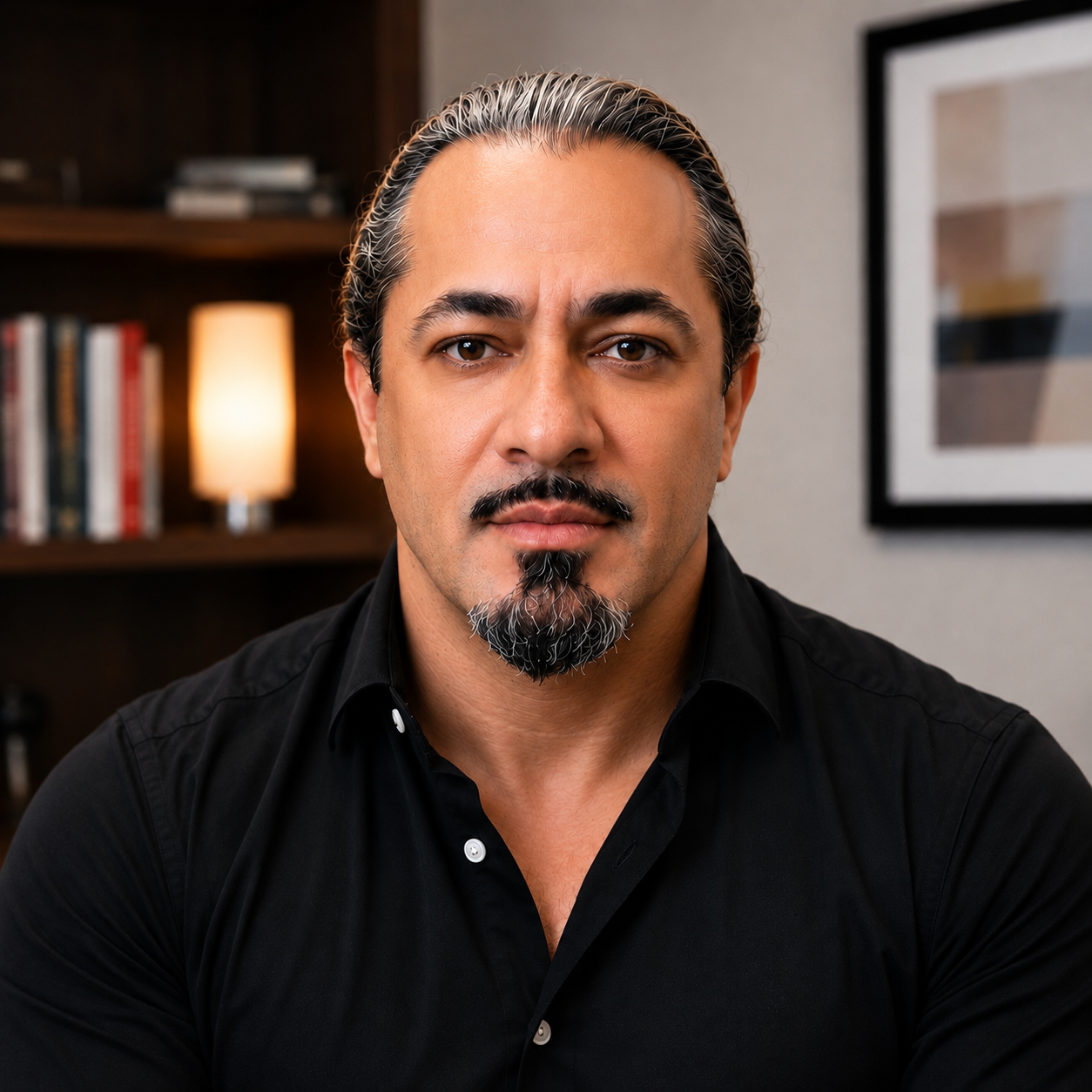
Samir Levin
Samir Levin is a biohacker and longevity researcher with 25 years of personal experimentation across peptides, hormonal optimization, and regenerative medicine. He is the founder of Keys to Health — a platform combining a 112-compound research encyclopedia, AI-powered bloodwork analyzer, peptide protocol builder, and evidence-based PDF protocols used by thousands of biohackers worldwide.
Samir's work is grounded in first-person experimentation, not theory. He personally reversed 10+ years of AAS-induced gynecomastia without surgery using an enzymatic stack he developed and documented. His protocols are built from clinical literature, N=1 data, and feedback from the Keys to Health community.
He covers peptides, TRT/HRT, GLP-1 agents, senolytics, longevity stacks, cognitive enhancement, and animal longevity protocols for dogs, cats, and horses.
anti-aginglongevitybiohackingrapamycinpeptidesBPC-157mTORcellular senescence